Blog

  • Solving Common Garden Problems with Smart Hard Landscaping

    Solving Common Garden Problems with Smart Hard Landscaping

    Every garden has its quirks. A slope that makes half the space unusable. A corner that stays boggy through winter no matter what you plant there. A terrace that bakes in summer and turns into a skating rink the moment frost arrives. Most people assume these are just features of the plot they have to live with, but in our experience working across South West London, the vast majority of them are solvable. Often more easily than people expect.

    Hard landscaping gets talked about a lot in terms of aesthetics. New paving, a smarter patio, updated edging. And yes, it transforms how a garden looks. But the more interesting conversation, and the one we find ourselves having with clients again and again, is about how the right structural choices can fix the underlying problems that make a garden frustrating to use in the first place.

    A garden that drains well, sits level where it needs to, gives you usable outdoor space in all seasons, and does not constantly fight against the natural conditions of the plot is worth far more than one that simply looks good in photographs. Getting there is mostly a question of understanding which problems respond to which solutions, and then doing that work properly from the ground up.

    Poor Drainage and Waterlogged Ground

    Why It Keeps Happening

    This is the problem we hear about most. A lawn that stays soggy through winter, a patio that pools after every rain shower, a lower section of garden that effectively becomes a pond from November through to March. The culprit is almost always the same thing underneath all of it: London clay. It is dense, it does not drain freely, and when you lay paving or compact soil on top of it without thinking about where water is supposed to go, you create problems that only get more obvious as the years go on.

    What Actually Fixes It

    Good drainage design is not complicated in principle, though it does need to be thought through properly before any hard landscaping goes in. A patio with adequate fall, gentle enough that you would not notice it underfoot but consistent enough to channel water off the surface and away from the house, solves a remarkable number of ponding problems on its own. Pair that with a drainage channel or gulley at the lowest edge, running to a soakaway or connecting to a surface water drain, and you have dealt with the majority of what London clay does to a garden terrace.

    For lawns and planted areas, French drains installed along the boundary or across the lower section of a garden can make a dramatic difference. These are not elaborate structures. A trench, a perforated pipe bedded in gravel, covered and returned to grade. But they redirect water that would otherwise sit on the surface and give it somewhere to go. In gardens where we have installed these alongside permeable paving or gravel paths, the change through a wet winter is stark.

    Permeable paving is worth a specific mention here. Block paving and resin-bound gravel laid on a free-draining sub-base let water pass through the surface rather than run off it. In smaller London gardens where every square metre of hard surface matters, choosing permeable materials keeps water in the ground where planting can benefit from it and reduces the volume hitting your drainage system in one go.
    Sloping and Uneven Ground

    The Problem With Ignoring a Slope

    A sloping garden sounds like a design opportunity, and it can be. But left unaddressed, a significant slope makes most of the garden practically unusable. Furniture does not sit level, children cannot play safely on a gradient, and every time it rains heavily, you get water sheeting down the slope toward the house or pooling at the base. We see this across a lot of south-west London gardens, particularly in areas like Wimbledon and Putney where plots often follow the natural contour of the land.

    Terracing and Retaining Walls

    The most effective solution for a sloped garden is terracing: breaking the slope into a series of level platforms retained by walls or sleepers, each usable in its own right. Done well, this does not just solve the practical problems. It creates genuinely interesting garden structure, gives you distinct zones for different uses, and makes the most of a plot that might otherwise feel awkward.

    Retaining walls can be built from a range of materials. Natural stone gives a generous, established feel and beds into a planting-heavy garden beautifully. Brick suits a more formal setting. Timber sleepers work well in relaxed, naturalistic schemes and are particularly good at integrating raised planting beds into a terraced design. The choice of material matters less than the engineering behind the wall. A retaining structure that is taking real lateral pressure from soil and water needs to be built properly, with adequate footings, the right mortar or fixings, and drainage behind the wall so water does not build up and push against it.

    Steps between levels are worth thinking carefully about, too. Wide, generous steps that feel like a natural part of the garden rather than a utility feature make terraced gardens much more enjoyable to move around in. Narrow steps tucked into a corner feel like an afterthought and tend to make the whole design feel cramped. If you are going to terrace a garden, do the steps properly.

    Unusable Outdoor Space

    When Your Garden Just Does Not Work

    Some gardens are technically fine but practically useless. There is space, but nowhere comfortable to sit. There is a patio, but it catches the wind, gets no sun, or is too small to put a table on without blocking the back door. A garden that does not get used is a garden that does not give you anything back, which is a shame when the potential is there.

    Creating Space That Works in Practice

    The position of a seating area matters enormously, and it is something worth getting right before any paving goes in rather than after. A terrace that follows the sun rather than the shape of the house, that is sheltered from the prevailing wind, and that connects naturally to the kitchen or living space gets used through far more of the year than one that was positioned purely because it was the obvious spot behind the back door.

    Size is another thing people often underestimate. A patio that feels generous when it is empty can feel cramped the moment you add a table, four chairs, and a couple of plant pots. Working out what you actually need the space to accommodate and then adding a bit more is always the right approach.

    Defined paths and circulation routes are part of this, too. A garden where you are not quite sure where to walk, where the lawn gets worn in lines because there is no clear route from one part to another, can be transformed by a simple gravel or stepping stone path that gives people somewhere to put their feet. It sounds minor. In practice, it changes how a garden feels to be in completely. Have a look at some of the garden projects we have completed to see what a difference well-thought-through circulation makes to a space.

    Difficult Surfaces and Problem Patches

    The Spots That Never Seem to Work

    Every garden has at least one. The shaded corner where nothing grows well and the ground stays damp. The strip along the side of the house that collects debris and looks unloved. The area under a large tree where the soil is dry, root-filled, and hostile to planting. These spots cause a disproportionate amount of frustration relative to their size.

    When Hard Landscaping Is the Honest Answer

    The temptation is always to try another plant. A different ground cover, something more shade-tolerant, something that might cope better this time. Sometimes that works. Quite often it does not, and the honest answer is that certain spots are simply better suited to hard landscaping than to planting.

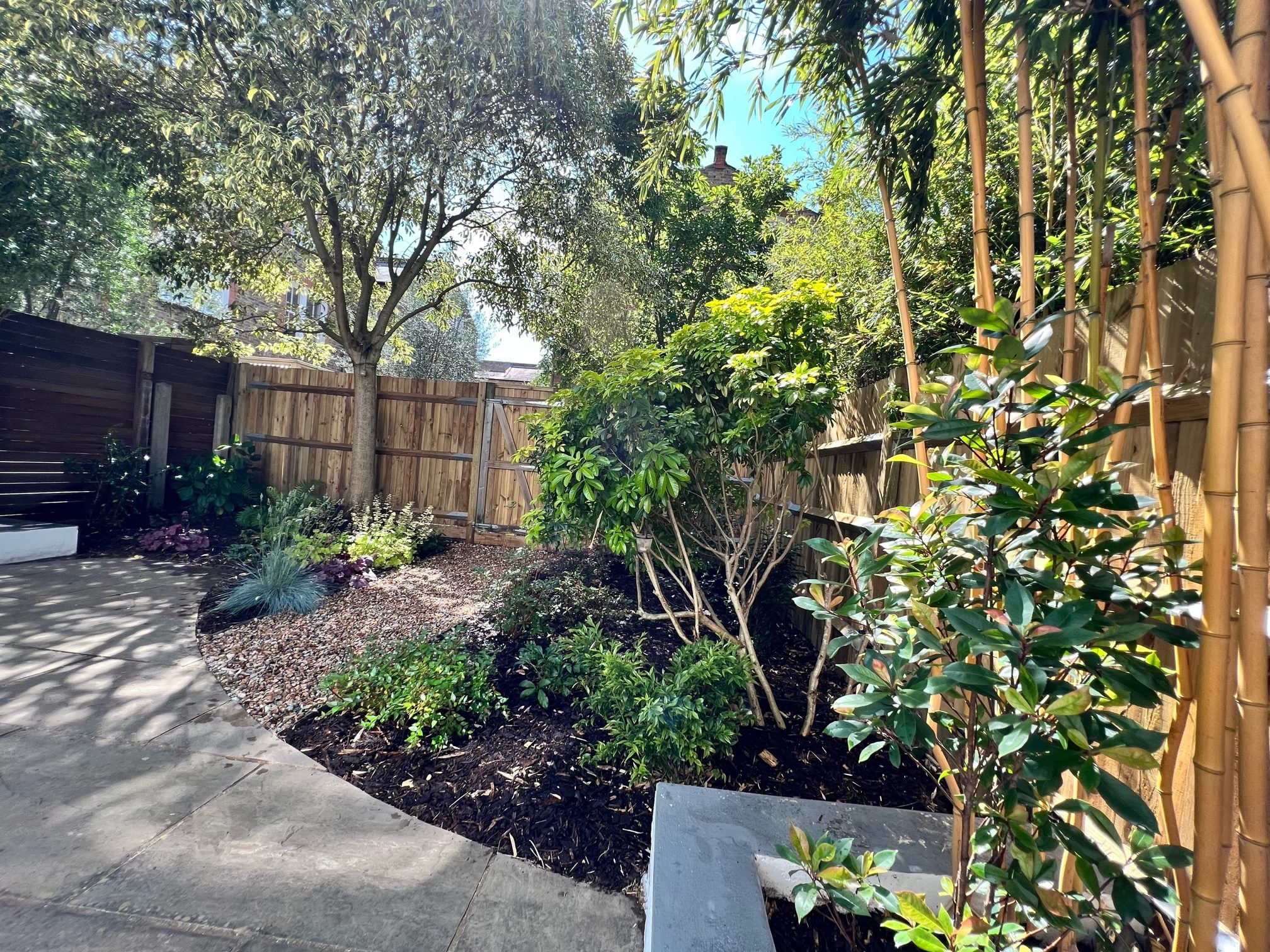
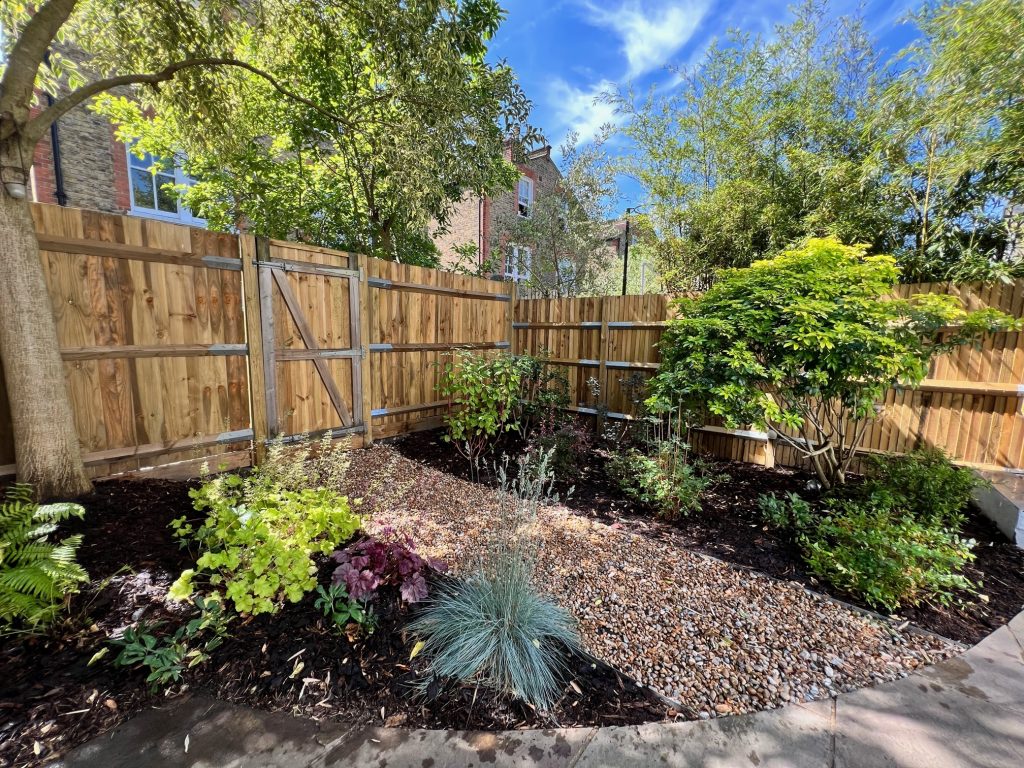
    A gravel garden under a tree, laid over a permeable membrane with a generous depth of aggregate, gives you a surface that looks good, requires almost no maintenance, and does not fight against the conditions the way planting does. A paved or decked area in a permanently shaded corner becomes a useful part of the garden rather than a problem to be solved every year. Side returns and awkward strips between buildings respond very well to a combination of hard surface and simple vertical planting, giving you a tidy, low-maintenance space from something that previously felt like dead ground.

    The key in all of these cases is choosing materials that suit the conditions rather than working against them. Shade, moisture, root pressure. These are not problems to be hidden. They are site conditions to be designed around.
    garden revamp after shot

    Lack of Privacy

    The Overlooked Garden

    A garden you cannot relax in because neighbours or passing traffic can see straight into it is a garden you will not use as much as you should. Privacy is one of the most common things people raise with us during initial conversations, and it is one of the most satisfying problems to solve because the difference it makes to how a garden feels is immediate and obvious.

    Structural Solutions That Actually Work

    Planting alone rarely solves a privacy problem quickly. It takes time to establish, it needs ongoing maintenance, and depending on where the oversight is coming from, it may not ever get tall enough to do the job properly. Structural solutions work faster and hold their ground without needing much from you.

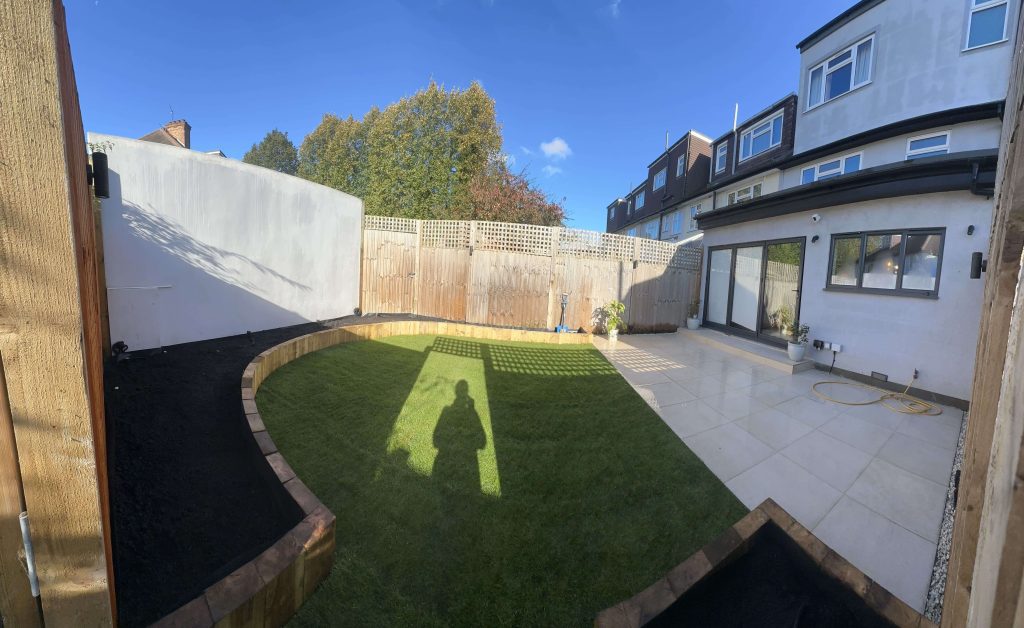
    Raised sleeper planters along a boundary add height and give you a planting bed at the same time, which means you get both the structure and the greenery without waiting years for one to do the job of the other. A well-designed timber or brick boundary feature, built to a height that addresses where the overlooking actually comes from rather than just going as tall as planning allows, makes a far more immediate difference than a row of recently-planted shrubs.

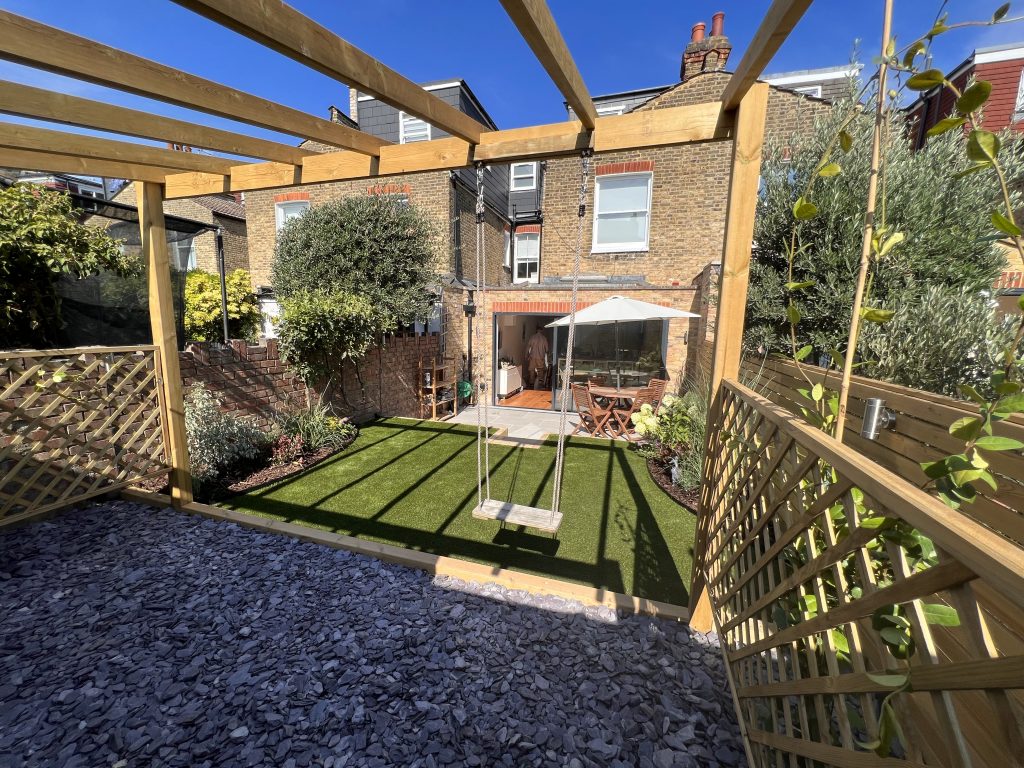
    Pergolas and overhead structures change the dynamic of a space completely. A seating area that feels exposed under open sky can feel genuinely private and sheltered under a pergola, even without solid sides. Climbing plants establish on these structures relatively quickly, and in the meantime, the structure itself provides enough visual separation to make the space feel contained and comfortable.

    How The Southwest London Gardener Can Help

    These are the conversations we have with South West London homeowners constantly, and we genuinely enjoy them. Not because we have a standard answer for every garden, but because every plot is different, every combination of problems is slightly different, and working out the right approach for each one is the interesting part of what we do.

    Whether you are dealing with drainage that has defeated you for years, a slope you have never quite known what to do with, or simply a garden that does not work the way you want it to, we can come out, take a proper look, and give you an honest view of what the options are. No jargon, no overselling, no pressure to commit to anything on the day.

    We know these gardens well, we know the soil conditions and the drainage challenges that come with them, and we know how to design and build hard landscaping that solves real problems rather than just looking good in a brochure. Get in touch with the team when you are ready for a conversation.

  • How to Create a Garden Design Brief for a Gardener

    How to Create a Garden Design Brief for a Gardener

    A garden project rarely fails because of lack of ideas. Most falter because those ideas never get shaped into something usable. You might know that the garden feels awkward, underused, or tiring to look after, yet putting that feeling into words can be surprisingly hard. This is where a garden design brief becomes useful, not as a formal document, but as a way of slowing things down just enough to think clearly.

    A design brief captures intent. It records how you live now, how you would like to live, and how much compromise you are prepared to accept along the way. It allows the person designing or building the garden to respond to reality rather than assumptions. When that happens, projects tend to feel calmer, decisions become easier, and the finished garden settles into daily life instead of fighting it.

    At The Southwest London Gardener, we’ve seen countless projects transform when homeowners take time to create a thorough brief. Whether you’re planning a complete garden transformation or targeted improvements to specific areas, a well-considered brief forms the foundation of successful collaboration.

    Why a garden brief matters

    Many disappointing gardens look perfectly fine at first glance. The paving is neat. The planting is healthy. Yet something feels off. Seating is in the wrong place. Maintenance feels heavier than expected. Certain areas never get used.

    These issues usually trace back to the beginning. Without a clear brief, decisions are made in isolation. One choice seems reasonable, then another is layered on top, until the whole space feels disjointed. A brief prevents this drift by anchoring every decision to a shared set of priorities.

    A garden brief also serves as a reference point throughout the project. When questions arise during construction or planting, both you and your designer can return to the brief to check whether a proposed solution aligns with your original intentions. 

    Before the meeting: preparation and information gathering

    Preparation does not mean doing the designer’s job for them. It means understanding your own situation well enough to describe it clearly. Even rough notes are better than relying on memory in the moment.

    Define needs versus wants

    This is often the most revealing exercise. Needs are the conditions that make the garden workable. Wants are the features that add enjoyment once those conditions are met.

    A need might be safe boundaries for children or pets, storage that actually fits daily clutter, routes that work in bad weather, or adequate screening from neighbouring windows. A want might be a water feature, a fire pit, an outdoor kitchen, or a showpiece planting area. Neither category is more virtuous than the other, but confusing them leads to frustration.

    Some needs only become apparent when you think through daily routines. Where do bins go? How do you move garden waste? Where do muddy boots dry? These practical considerations often determine layout more strongly than aesthetic preferences. 

    Set a realistic budget

    A shared understanding of budget allows ideas to develop in proportion. It avoids designs that look exciting but quietly rely on assumptions that never matched reality. Your designer can work creatively within constraints when they know what those constraints are.

    Consider whether the project needs to happen all at once or whether it can be phased. Some gardens benefit from staged implementation, allowing you to spread costs whilst learning how you use the space. This approach works particularly well for larger gardens or projects where certain elements are more urgent than others.

    Remember that budget includes not just construction but ongoing maintenance costs. A cheaper installation that requires expensive annual maintenance may prove more costly over time than a higher initial investment in durable, natural materials like FSC-certified wood and natural stone that age gracefully.

    Decide your maintenance level

    Maintenance is not an afterthought. It is part of the design.

    Some people want a garden that holds together with minimal attention. Others enjoy ongoing involvement and seasonal change. Neither approach is better, but mixing them leads to disappointment.

    Be clear about time, energy, and interest. A design that respects those limits will age far better than one that ignores them. Many gardens fail slowly, not because they were badly built, but because they asked too much of their owners.

    Think realistically about your gardening knowledge and physical capabilities. A garden designed for an experienced gardener who enjoys weekly maintenance looks very different from one designed for someone who wants to spend their free time using the space rather than maintaining it.

    Gather inspiration for style and features

    Inspiration helps when it is used carefully. Images without explanation can mislead as easily as they inform.

    When collecting images, add notes. What attracts you here? The density of planting? The sense of enclosure? The materials used? The atmosphere created? Sometimes it is not the garden itself, but how it feels to be in it. A single photograph might appeal for reasons that have nothing to do with the actual design,such as the quality of light, the photographer’s skill, or simply a momentary composition.

    Equally useful is naming what you dislike. Strong dislikes prevent time being spent on directions you were never going to accept. This is not about taste. It is about efficiency. If you cannot stand formal topiary, knowing this early saves exploring entire design directions that rely on clipped hedging.

    Look beyond Pinterest and Instagram. Visit gardens open to the public, notice gardens you pass regularly in areas like Richmond, Barnes, or Wandsworth, photograph spaces that work well. Real gardens in real conditions often provide more useful reference than heavily styled photography. They show how designs age, how plants actually grow in London’s climate, and how spaces function in daily use.

    List site constraints and problem areas

    Every site has limits. Pretending they are not there only delays dealing with them.

    Note areas that flood, bake in summer, or feel exposed. Mention neighbours, overlooking windows, awkward boundaries, or access challenges. These details often dictate layout more strongly than style preferences ever will.

    Document existing features that must stay, such as established trees you want to keep, manhole covers that cannot move, underground services, rights of way, or planning restrictions. These constraints are not problems to solve later. They are design parameters that need addressing from the start.

    Consider access for construction and future maintenance. Can materials be delivered easily? Is there room for machinery if needed? Will contractors need to move through your house? These practical considerations affect both design possibilities and project costs. Experienced teams familiar with London properties understand these access challenges and can plan accordingly.

    During the initial consultation: what to cover

    The first meeting sets the tone for everything that follows. It is not about agreeing solutions on the spot. It is about understanding each other.

    Walk the site and explain conditions

    A walk through the garden reveals patterns that drawings miss. Show where you sit naturally. Where paths form without being designed. Where frustration builds. Where you linger and where you hurry past.

    These observations help the designer read the garden as a lived space rather than a blank canvas. Point out the route you naturally take when hanging washing or putting out bins. Show where water runs during heavy rain. Explain which areas feel inviting and which feel uncomfortable, even if you cannot articulate exactly why.

    Walk the boundaries and discuss what lies beyond them. Views worth framing, eyesores requiring screening, noise sources, and privacy concerns all influence design decisions. Your designer needs to understand the garden in its context, not as an isolated plot. This is particularly important in urban areas where neighbouring properties sit close together.

    Discuss how the garden will be used

    Return to daily life. Morning coffee. Evening meals. Children playing. Quiet moments. Guests arriving. Frequency matters as much as activity.

    A space designed for occasional gatherings feels very different from one used every day. Saying this out loud shapes decisions more than any style reference. If you eat outside twice a summer, that influences design differently than if you plan to cook and dine outdoors from April through October.

    Think about different household members and their needs. Children’s play requirements change as they grow. Elderly relatives may need different access considerations. Pets have their own patterns of movement and behaviour that affect garden design. A natural garden approach can accommodate all these needs whilst creating spaces that support local wildlife and contribute to environmental wellbeing.

    Address privacy and screening goals

    Privacy concerns are often vague until discussed properly. Be specific about sightlines, times of day, and seasonal changes.

    Screening can be achieved through planting, layout, or built elements, but only once the problem is clearly understood. Sometimes the issue is not a general overlooking but a specific window at a particular height. Sometimes it is sound rather than sight. Occasionally, it is about creating the feeling of enclosure even when actual privacy exists.

    Remember that screening works both ways. Trees and hedges that block unwanted views also block your own sightlines and reduce light. Finding the right balance requires understanding exactly what you are trying to achieve and what you are willing to sacrifice to achieve it. Native hedging and carefully positioned trees provide effective screening whilst supporting biodiversity.

    Share materials and finish preferences

    Materials carry long-term consequences. They affect how a garden ages, how it feels underfoot, how much care it requires, and how it responds to weather.

    Even provisional preferences help narrow the field. They also reveal where flexibility exists and where it does not. If you love the look of natural stone but cannot tolerate moss and algae growth, that shapes material choices significantly. If you want low-maintenance paving but object to the appearance of resin-bound surfaces, your designer needs to find alternatives that meet both criteria.

    After the meeting: formalising the written brief

    Review and refine the summary

    A written summary should capture goals, priorities, style direction, budget expectations, maintenance level, and timing. Read it slowly. Read it more than once. Share it with anyone else who will use the garden regularly.

    If something feels wrong on the page, it will feel worse in reality. This is the moment to adjust without cost. Changing your mind after construction starts costs time, money, and goodwill. Changing your mind while reviewing a written brief costs nothing.

    Finalise what is included and excluded

    Scope clarity prevents tension later. Know whether the service covers concept design, detailed drawings, planting plans, sourcing, or oversight. Know whether you are receiving a single concept or multiple options for comparison.

    Equally important is naming what sits outside that scope. If ongoing maintenance advice is not included, will it be available separately? If plant sourcing is your responsibility, do you know enough to make appropriate choices? Clear edges make collaboration easier and prevent misunderstandings down the line.

    Create a mood board to confirm direction

    A mood board brings abstract ideas into focus. Materials, colours, textures, and planting character sit side by side, revealing relationships that descriptions alone cannot capture.

    This step often reveals mismatches early. That contemporary paving might clash with the cottage-style planting you imagined. Those bold architectural plants might not suit the soft, naturalistic atmosphere you described. Resolving these conflicts now saves rework later and ensures everyone is truly working toward the same vision.

    Common mistakes when creating a garden brief

    Even well-intentioned homeowners make predictable errors when preparing garden briefs. Understanding these pitfalls helps avoid them.

    • Being too vague about priorities rarely helps. Saying you want a beautiful, low-maintenance garden describes nearly every domestic garden project. Instead, explain that you need morning sun for breakfast but afternoon shade for summer evenings, or that you’re willing to spend two hours weekly on maintenance but no more.
    • Focusing on specific features rather than desired outcomes limits creative solutions. If you want a pergola for shade and structure, say that. Your designer might propose alternatives, large canopy trees, architectural planting, or different structures, that achieve the same purpose more effectively for your specific site.
    • Underestimating practical necessities like bin storage, hose access, and tool storage creates problems later. These requirements do not disappear. If not properly accommodated from the start, they end up dominating the garden in ways that undermine the overall design.
    • Ignoring seasonal variations means designing only for summer. A garden that looks spectacular in June but barren from November through March has limited value in London’s climate. Consider year-round usage and appearance when developing your brief.

    Creating gardens that work for life

    A garden design brief does not remove uncertainty. It reduces avoidable mistakes. It gives everyone a shared starting point and a way to measure progress. Most importantly, it creates space for thoughtful decisions before concrete is poured or plants go into the ground.

    The time invested in creating a thorough brief pays dividends throughout the project. It prevents expensive changes during construction, reduces the risk of disappointment with the finished result, and makes the entire design and build process feel more collaborative and less stressful.

    At The Southwest London Gardener, we’ve developed natural, sustainable approaches that work specifically with London’s urban conditions. This means selecting native plants that thrive in local soil and weather, using organic pest control methods, implementing water conservation strategies, and choosing materials that reduce environmental impact whilst ageing gracefully.

    With over 50 years of combined hands-on experience working across Southwest London, from Wandsworth to Richmond, Putney to Twickenham, we’ve seen which approaches deliver lasting results in our specific conditions. Whether you need a complete garden transformation or ongoing natural maintenance, the foundation always begins with clear communication about what you actually need and want from your outdoor space.

  • How a Garden Makeover Changes the Entire Feel of a Home

    How a Garden Makeover Changes the Entire Feel of a Home

    You know that feeling when you walk into a house and something just feels off? The rooms are fine, the furniture works, but the whole place feels smaller or darker or more closed in than it should. Half the time, the problem isn’t inside at all. It’s what you see through the windows.

    A neglected garden doesn’t just sit there looking bad. It actively changes how your home feels. The view from your kitchen becomes something you avoid. Your living room feels darker because overgrown shrubs block the light. Your whole house shrinks because you’ve lost what could be extra living space. At The Southwest London Gardener, we’ve seen this pattern play out hundreds of times across properties from Wandsworth to Richmond. The garden isn’t separate from the home. It’s part of how the whole place feels.

    Your home feels bigger when the garden actually works

    Here’s what happens: you fix up the garden, and suddenly your house feels like it has more room. Not because you knocked down walls or added an extension. Because you’ve got usable space that wasn’t there before.

    That unused patch of lawn becomes somewhere you have morning coffee. The overgrown corner turns into a spot where you can take work calls away from the kitchen table. The bit outside the dining room becomes an actual dining area for six months of the year. Your home hasn’t changed size, but it feels bigger because you’re using more of it. Think of it as adding a room, except this one doesn’t have walls, and you don’t need planning permission.

    Different zones for different moods

    A blank lawn doesn’t invite much. But create distinct areas (a dining spot with proper paving, a lounging corner with decent seating, maybe a small work area if you’re home a lot) and the space becomes somewhere you actually want to be. The dining zone needs to be near the kitchen because nobody enjoys hauling food across wet grass. It wants overhead coverage so you’re not eating in full sun at midday. The lounging area needs shelter and privacy from next door’s windows, otherwise you’ll never relax there. Maybe add a fire pit if you want to stretch the season into autumn.

    The threshold between inside and outside

    Walk through your back doors right now. What happens? Do you step down onto patchy grass? Does the paving style clash with your kitchen floor? Does it feel like you’re leaving the house rather than extending into another part of it?

    That awkward transition is why gardens feel separate instead of connected. Match the materials and the feeling changes. Continue your indoor flooring style outside (similar colours, compatible textures) and the boundary blurs. Modern porcelain works well for this because it can echo interior tiles whilst handling London weather.

    The architectural style matters too. A contemporary home with clean lines wants structured planting and geometric shapes. A Victorian terrace suits natural stone and softer schemes. Fight this relationship, and the whole thing feels wrong. Work with it, and everything clicks. We pay attention to these transitions at The Southwest London Gardener even when we’re using sustainable materials like FSC-certified wood. They still need to feel like they belong with the house, not like an afterthought stuck on the back.

    The first thing people feel about your home

    Before anyone steps through your front door, they’ve already formed an opinion. The front garden sets that tone. A neglected one says abandonment, even if everything inside is immaculate. A well-kept one says care and attention. This affects how you feel coming home every single day. It affects how visitors react before they’ve said hello. And if you’re selling, it affects whether people even want to come inside. This isn’t about showing off. It’s about the emotional tone the property sets before words get exchanged.

    Front gardens don’t have much space but they punch above their weight for impact. Neat paths say intention. Maintained greenery says someone cares. Lighting makes the entrance feel welcoming after dark instead of slightly threatening. The material of the path matters more than you’d think. Cracked concrete whispers neglect. Clean porcelain or natural stone suggests quality. The planting either backs this up or contradicts it. Overgrown shrubs blocking windows feel hostile. Structured evergreens with seasonal flowers feel inviting. People notice small things without realising: crisp edges between beds and paths, healthy plants, no weeds poking through joints. These details combine into a feeling that the home is loved.

    Making a dated property feel current

    A dated garden makes the whole property feel stuck in the past. Replace worn concrete with modern porcelain, and the entire frontage updates itself. Remove overgrown, leggy shrubs, and suddenly there’s light and space where before there was just mass. The house feels contemporary rather than tired. You don’t need to redo everything. Target the high-visibility bits (entrance, street view, space outside main windows) and the impact spreads.

    Colour makes a bigger difference than people expect. Heavy, dark planting creates weight and gloom. Lighter foliage with occasional blooms lifts everything. You’re not after bright colour everywhere, just avoiding that oppressive density that makes places feel closed off and heavy.

    What it does to property value

    A proper garden makeover can push property value up by 20%. That’s not marketing speak. It reflects real improvements (extra usable space, better materials, proper functionality) plus the intangible stuff like emotional connection and quality of life signals. The saleability impact might matter even more. Gardens that work sell faster because first impressions stick. Buyers can picture themselves there. They form attachments quicker. Even if you’re not planning to sell anytime soon, this value matters. You get the quality of life benefits now, whilst protecting what the place is worth later. Not many home improvements do both.

    Light and atmosphere flow from outside

    What sits outside your windows affects how bright and airy rooms feel inside. Change what’s in the garden and the house itself feels different. This connection gets missed during planning but hits you hard once done. In London’s climate, year-round thinking matters. A garden designed only for summer feels disappointing eight months of the year.

    Bringing more light indoors

    Dark, heavy trees near the house can steal interior light dramatically. Remove or heavily prune these and gloomy rooms become bright, welcoming spaces. The psychological shift from dim to airy changes how the whole property feels to live in. Reflective surfaces multiply whatever light you’ve got. Pale paving bounces light toward the house. Water features create dancing reflections. Light-coloured walls or fencing brighten shaded spots. These work together to maximise natural light. Balance matters, though. Strip out all mature planting and you create harsh, exposed conditions. The goal is strategic editing: remove specific problem trees whilst keeping valuable shade and structure. Experienced designers spot which changes deliver maximum benefit with minimum loss.

    Keeping the view attractive in winter

    Evergreen shrubs hold their form when deciduous plants drop leaves. This structure stops gardens looking bare and abandoned during cold months. Box, yew, holly give year-round presence with minimal fuss once established. Good hardscaping pulls equal weight for winter interest. Quality paving, solid boundaries, architectural features maintain appeal regardless of season. These form the garden’s bones, the framework holding everything together when planting retreats. Winter-flowering plants add surprise beauty during darker months. Hellebores bloom December through March. Winter jasmine gives bright yellow flowers from November. Mahonia offers scented yellow blooms plus evergreen structure. These transform the winter view from bleak to interesting.

    At The Southwest London Gardener, we design thinking about all twelve months. Our natural approach means choosing plants thriving in local conditions year-round, not just peak season. This creates gardens staying attractive whilst needing consistent rather than seasonal maintenance.

    When house and garden feel like one thing

    The best garden makeovers create alignment between what the house looks like and how the garden feels. Contemporary homes want clean lines and structured planting. Traditional properties suit softer, naturalistic approaches. Period features benefit from sympathetic materials respecting original character. Fight this relationship and everything feels wrong. Work with it and it clicks.

    This extends to what’s inside. Colours, materials, design language echoing interior choices create flow. The garden becomes an extension rather than an addition, another room happening to lack walls.

    Stack all these elements together (more usable space, better first impressions, improved well-being, extra light, reduced maintenance burden) and the whole property transforms. The house feels bigger because outdoor space functions. Daily living becomes more enjoyable because pleasant areas sit just outside your doors. Pride replaces that nagging awareness of wasted potential.

    We’ve seen this pattern play out repeatedly across Southwest London over 50 years of combined experience. Thoughtful garden design changes not just outdoor space but how being at home feels.

    Gardens mature slowly but foundational changes (structure, materials, layout) hit immediately. Planting fills in gradually, showing its potential across seasons. You enjoy benefits now whilst watching future development unfold.

    Whether you’re getting ready to sell, settling in long term, or just tired of avoiding the view through your windows, a garden makeover returns more than looks. It changes how you live daily, how guests perceive the place, and how the property performs if you sell.

    Most of all, it transforms an area currently creating stress into a space actively contributing to well-being, functionality, and pride of ownership. That shift changes everything.

  • 7 Tips on How to Make a Small London Garden Look Bigger

    7 Tips on How to Make a Small London Garden Look Bigger

    Most south-west London terraces share the same garden problem. A narrow strip behind the house, fences pressing in, neighbours overlooking from above. The plot was never going to be generous because the houses weren’t built for it.

    The good news is that small gardens don’t have to feel small. A plot of twenty square metres can feel like a corridor or it can feel like a proper outdoor room, and the difference rarely comes down to budget. Mostly it comes down to a handful of design choices that nobody bothers to mention until you’ve already wasted money on the wrong thing.

    What follows are seven techniques that genuinely work in the kinds of gardens you find around Twickenham, Wandsworth, Teddington and the surrounding areas. None need planning permission. Most don’t need a builder. Some are weekend jobs you can knock out yourself, others want a bit more thought and possibly some help. Pick the ones that fit your plot and skip the rest.

    1. Focus on the Fences

    The fences are doing more damage to your garden than anything else inside it. They’re tall, they’re close, and they’re the first thing you see when you step outside. Get them wrong and the whole space tightens around you.

    Paint colour is where the biggest gains happen. Dark stains have been everywhere in design magazines for the last few years, and they look gorgeous in the photos. The reality in a five-metre-wide London plot is different. Black and charcoal pull the boundary towards you and make a small garden feel smaller, not cosier.

    Pale colours do the opposite. Soft sage, chalky off-white, dove grey, or a washed-out pale blue all push the fences back and let your eye relax. Cuprinol’s Wild Thyme is the one most local designers reach for because it softens timber without bleaching out in summer. Farrow & Ball’s Mizzle does a similar job at a higher price.

    Green is worth a thought too. A deep foliage tone makes the fence disappear behind whatever climbs up it, so your roses and jasmine read as proper features rather than ornaments stuck against a hard backdrop.

    Steer clear of anything bright or high-contrast. Cobalt and pillar-box red turn the fence into the loudest thing in the garden, which is the opposite of what you want. The boundary’s job is to recede, not perform.

    Practically, repainting fences is a weekend job. Power wash the timber, two coats of exterior wood paint, done. Brick walls need masonry paint over a primer and take a bit longer. Pound for pound, paint on the boundaries probably gives you the best return on investment available.

    2. Plant Vertically

    Once the borders and pots are full, the only space you’ve got left is on the walls and fences. That vertical surface is where small gardens find their extra room, and a fence smothered in jasmine stops looking like a fence at all.

    Star jasmine is the climber to start with. Evergreen, beautifully scented through summer, and happy in the dappled light most terraced gardens get. The London heat island means it survives winters across the south west boroughs without any fuss.

    Climbing hydrangea handles the brutal north-facing wall where almost nothing else will grow. It takes two or three years to settle in, then becomes vigorous enough to need regular pruning. Worth the wait if you’ve got that difficult shaded wall.

    Need rapid coverage? Clematis montana throws out ten feet of growth in a single season and produces a wall of pink or white blossom by April. Hard to beat for impact in a hurry.

    Adding trellis above your existing fence panels is the cheap way to gain height. Standard panels reach six feet, and a slim oak trellis on top brings you to seven or eight without replacing perfectly good timber. Plants spill over the top and create a soft green skyline rather than a hard fence line.

    Don’t ignore edibles. Runner beans, French beans, cucumbers, and cordon-trained tomatoes all happily climb given a sunny aspect. Picking dinner off a wall that previously did nothing useful is more satisfying than it has any right to be.

    garden after

    3. Create an Appropriate Garden Design

    Most failed gardens start the same way. Someone gets excited at the garden centre on a sunny April Saturday, comes home with a car boot full of plants, and starts digging. Six months later the layout’s wrong, the patio sits awkwardly, and half the plants are struggling. You can avoid all of that by sitting down with a tape measure first.

    Measuring properly takes an hour and shows you things you’d otherwise miss. Boundaries that look straight turn out to lean. The kitchen extension steals more width than it appeared to. The side return barely sees the sun for six months of the year. Sketch the plot on graph paper or use a free app like iScape so you’ve got an honest record to work from.

    The harder question is what you actually want the garden to do. Outdoor dining? Lawn for kids? Vegetables? A reading corner that catches morning sun? You can’t have everything in a small London plot. Picking two main functions and committing to them produces a garden that works. Trying to fit six functions in produces a garden that doesn’t.

    Once you’ve decided, the rest follows. Proportions, materials, planting palette, budget priorities, all of it falls into place around those two choices.

    If the planning side feels like more than you want to take on, the garden design service at The Southwest London Gardener handles compact plots across the area. Getting it right on paper saves real money long term, because you stop buying things you’ll regret in eighteen months.

    4. Split Your Garden Up

    Cutting a small garden into smaller sections sounds completely backwards. Surely you want to keep everything as open as possible, let the eye stretch from the back door to the rear fence, maximise the apparent room.

    It turns out the opposite works better. A garden you can take in completely from one viewpoint reveals its size in a single glance, and your brain registers it as small. A garden where part of the layout sits hidden from view leaves the brain guessing about what’s beyond, and the brain almost always assumes more rather than less. That guesswork produces the feeling of a generous space that pure measurement won’t support.

    Switching surface materials is the simplest way to create zones. Sandstone patio at the house, gravel underfoot leading to a small lawn at the rear. Three distinct areas from materials alone, and the transitions tell your eye you’re moving through different rooms rather than across one rectangle.

    Planted dividers do the same job with more elegance. A waist-high border running halfway across, anchored with a multi-stem amelanchier or a clipped box ball, breaks the sightline without slamming a wall through the middle. You see there’s more garden beyond, but not all of it at once, which is exactly where the perception of extra space comes from.

    Furniture position matters too. A dining table pushed tight against one side opens up a clear view down the other edge. Centre it and you’ve chopped the visible garden in half. A bench tucked into a corner under climbing roses stops being a seat and starts being somewhere worth walking to.

    5. Reflections Are Your Friend

    A well-placed garden mirror does something close to magic for almost nothing. Hang it right and you’ve doubled the apparent depth of the garden for the cost of a frame and some wall plugs.

    Placement is everything. A mirror facing the seating area reflects whoever’s sitting there back at themselves, which gets uncomfortable fast. Angle it instead to catch a planted border, a climbing rose, or a strip of sky between rooflines, and the reflection reads as more garden. Another bed glimpsed through a doorway. A path leading somewhere unseen.

    Antique window frames repurposed as garden mirrors have become a SW London signature, partly because they suit period houses and partly because the slight imperfection in old glass softens the reflection. The vintage shops along Northcote Road throw up usable pieces fairly often, and Battersea car boot is worth a Sunday morning if you’re up early. For something cleaner, a black-framed rectangular mirror at eye level pulls light into shaded corners without committing to a period look.

    Quick warning about birds. A perfectly clean mirror placed in clear sight of an open garden occasionally fools them into flying straight at it. Tucking the mirror partly behind planting solves it, as does angling it down rather than mounting it dead-on. Aged glass rarely causes the problem because the reflection isn’t sharp enough to fool wildlife.

    North-facing gardens benefit most because they’re starved of light to begin with. A mirror angled to bounce afternoon sun into a darker corner can completely change how the space feels, and plenty of terraces across Wandsworth and Putney have been opened up exactly this way.

    Twickenham pergola

    6. Use Different Levels

    Flat gardens read flat. Even small changes in height add a layered, sculptural quality that makes the same square footage feel substantially bigger, because the eye processes vertical interest differently from horizontal interest.

    You don’t need much. Two steps up onto a raised deck or down into a sunken patio creates a meaningful elevation shift without major structural work. A low retaining wall holding back a planted border separates seating from planting and gives the garden a clear visual hierarchy. Reclaimed railway sleepers handle this kind of work with a rough-and-ready look that suits cottage gardens. Brick or rendered blockwork produces cleaner lines for more contemporary properties.

    Sunken seating has been having a moment in London garden design and the popularity is justified. A sunken patio with planted borders rising to eye level when you’re sitting down feels like a hidden room within the garden. The rest of the plot, viewed from below, gains real height and presence. Even three or four square metres of sunken area can become the most-used part of a small garden.

    A raised platform at the far end works the opposite way to similar effect. Building a deck or patio at the back of a long thin plot pulls your eye down the length of the garden and rewards the journey with a different view back towards the house. Add a pergola overhead and you’ve created an outdoor room that didn’t exist before.

    There’s a drainage benefit too. South west London sits on heavy clay, which means flat gardens turn boggy through wet winters. Raising patios and seating areas above ground level keeps them usable when the rest of the garden is squelching.

    7. Make Storage Space

    A garden full of stuff feels smaller than the same garden empty of stuff. Wheelbarrows leaning against fences, pots stacked in corners, hoses coiled across the lawn, bags of compost slumped against the shed. Each thing seems harmless on its own. Together they fill the space with chaos, and your eye reads chaos as smallness regardless of the actual measurements.

    Built-in storage solves it permanently. A bench seat with a hinged lid swallows cushions and small tools without taking any space that wasn’t already committed to seating. A slim cedar storage unit running along one fence absorbs the lawnmower, watering cans, hand tools, and bags of compost, and reads as part of the boundary rather than as another thing taking up room.

    Vertical storage handles whatever doesn’t fit horizontally. Garden tools hanging from hooks on a fence-mounted rail look intentional rather than messy and keep everything off the ground. A wall-mounted hose reel solves the tangled-hose problem in about as long as it takes to drink a cup of tea. Compost bins tucked behind trellis screens disappear from view while still doing their work.

    Sheds need careful thought. The pebbledash-and-felt shed of mid-twentieth-century gardens has become a visual liability rather than an asset. A modern cedar or charred timber design is a different beast entirely, and a green roof planted with sedum recovers some of the planted surface area lost to the shed footprint. Done well, the shed stops being something to hide and becomes something worth looking at.

    The Southwest London Gardener Landscaping Services

    The Southwest London Gardener has been transforming compact gardens across Twickenham, Wandsworth, Teddington, Putney, Wimbledon, and Battersea for over a decade. The team handles the full process, from design and 3D visualisation through hard landscaping, planting, and ongoing maintenance, with particular experience in the kinds of plots most homeowners assume have already maxed out their potential. Shaded courtyards have become outdoor dining rooms. Long thin strips behind Victorian terraces have become proper family gardens. Tired patios have been redesigned into spaces that genuinely add value to the houses behind them.

    A free site visit costs you nothing more than an hour of conversation in your own garden. You get an honest assessment of what’s realistically achievable within your budget, ideas you may not have considered, and a clearer sense of which interventions matter most. No obligation, no hard sell. Get in touch to arrange a visit, or have a look through the completed project gallery for a clearer picture of what’s possible.

  • How to Create Year-Round Garden Colour With Low Maintenance

    How to Create Year-Round Garden Colour With Low Maintenance

    Some gardens look absolutely lovely in June, then quietly fade into something rather disappointing by autumn. You spend time and money on summer bedding plants, only to watch them collapse at the first frost, leaving you with bare patches and dull greens through winter. The garden starts to feel like yet another job on your already long to-do list.

    It really does not have to be this way. With a bit of thoughtful planning at the start, your garden can give you colour and interest throughout the entire year without needing constant attention. The trick is not about working harder, but about choosing plants that naturally do well and look after themselves once they are settled in.

    Here at The Southwest London Gardener, we have transformed gardens from Twickenham to Wandsworth, and we always look to create colourful and bright spaces that last 365 days a year. We’ve created this blog to tell you how.

    Start With a Low-Maintenance Design Approach

    The secret to a garden that looks good all year while staying manageable is surprisingly simple: plant things that stick around and come back reliably, rather than things you need to replace every few months. Build your garden with permanent structure first, then layer in hardy plants that return year after year.

    Think of it in layers, like building a good meal. Evergreen shrubs and small trees are your foundation, giving the garden shape and presence even in the depths of winter. Hardy perennials are your main course, returning faithfully each spring to flower through the seasons. Ground covers and a good layer of mulch are the finishing touches that keep weeds down and moisture in.

    When you plan for year-round interest from the beginning, you are not constantly digging things up and starting again. The garden simply unfolds naturally through the seasons, with different plants having their moment at different times.

    Create the Evergreen Backbone

    Evergreen Shrubs That Keep Shape With Minimal Pruning

    Evergreens really are the reliable friends of any low-maintenance garden. They stay looking presentable when everything else has died back for winter, and most only need a quick tidy once or twice a year. Holly gives you glossy leaves all year, plus lovely berries for the birds in winter. Yew makes wonderful hedging and can be shaped into topiary if you fancy something a bit more formal.

    These plants quietly hold your garden together. When the perennials have faded away in autumn, and the spring bulbs are still sleeping underground, your evergreens make sure the garden still looks intentional and cared for.

    Build Colour Through Foliage

    Here is something many people do not realise: flowers come and go in a matter of weeks, but foliage stays for months. Adding plants with coloured leaves means you get lasting interest without relying entirely on blooms. Evergold brings gorgeous golden stripes that really brighten up shady spots. Lamb’s ears have soft, silvery leaves that catch the light beautifully, and children love to touch. Photinia ‘Red Robin’ gives you brilliant red new growth each spring that gradually matures to a handsome glossy green.

    These plants ask absolutely nothing of you in terms of maintenance, yet they add months of visual interest. They are particularly valuable in winter when flower colour is naturally scarce.

    Add Winter Impact With Stems and Winter Bloomers

    Winter gardens do not have to be dull, and actually some of the loveliest garden moments happen in the colder months when you are not expecting them. Dogwood stems turn the most wonderful shades of red, orange, or bright yellow in winter, creating real impact when there is little else going on. You simply cut them back hard each spring and they reward you with fresh coloured stems the following winter.

    Then there are the winter-flowering plants that feel like little gifts. Hellebores bloom from January right through to March, often pushing up through snow, and they ask for almost nothing in return. Winter-flowering Camellias bring those perfect, waxy flowers in shades of pink and white. Witch Hazel produces delicate, spidery flowers in yellow or orange that smell absolutely lovely on a cold day. These plants remind you that the garden is still very much alive, even in the depths of winter.

    Choose Hardy Perennials as the Main Flowering Engine

    Why Perennials Reduce Maintenance

    Perennials are wonderful for gardeners who want colour without endless replanting. They die back each winter, have a good rest underground, then pop up again each spring ready to flower. You plant them once and enjoy them for years. Compare this to annuals, which you have to buy and plant fresh every single season, and you can see why perennials make life so much easier.

    The important thing is choosing perennials that actually suit your conditions. Plants that are happy in your soil, your amount of sunlight, and our local climate will thrive without you fussing over them. Plants that are struggling against their environment need constant attention and never really look their best anyway.

    Perennial Choices by Season

    Spring starts gently with Hellebores and Primroses, giving you early colour when not much else is awake yet. Then summer arrives and perennials really come into their own. Lavender gives you that lovely structure and gorgeous scent that says summer. Echinacea brings bold, daisy-like flowers that bees absolutely adore. Salvia produces tall spikes of blue or purple that keep flowering for months. Hardy geraniums fill in gaps beautifully and flower reliably without any drama.

    Autumn keeps the show going with Sedum, whose flat flower heads start pink and gradually turn to lovely russet tones, and Asters, which bring masses of colour just when most other things are packing up for winter. Rudbeckia bridges late summer into autumn with those cheerful yellow flowers that brighten even grey days.

    Maintenance-Reducing Traits to Prioritise

    When you are choosing perennials, look for words like hardy, resilient, and drought-tolerant. These are the plants that cope well with a bit of neglect and do not sulk if conditions are not perfect. Long-flowering varieties are brilliant because you get months of colour from one plant. And always choose things that suit our local climate rather than exotic plants that spend their whole lives struggling.

    Try to avoid perennials that need staking, frequent dividing, or endless deadheading, unless you actually enjoy that sort of pottering about. There are plenty of absolutely beautiful plants that just get on with life quietly without demanding much from you.

    Plan Continuous Colour With Succession Planting

    Succession planting sounds rather technical, but really it just means choosing plants that flower at different times so you always have something looking good. When one plant finishes its display, another one is just starting. It creates this lovely rotating show across all four seasons without you having to do anything except enjoy it.

    Think about what blooms when. Spring bulbs like Daffodils and Alliums start things off, then hand over to early summer perennials like hardy geraniums. These overlap with the mid-summer stars like Lavender and Echinacea. As summer gently fades, Sedum and Asters take centre stage for autumn. Winter brings those lovely Hellebores and coloured Dogwood stems. The garden just flows naturally from one season to the next.

    natural garden

    Cut Weeding and Watering With Ground Covers and Mulch

    Ground Covers That Suppress Weeds Naturally

    Ground cover plants do exactly what their name suggests: they spread out and cover the ground, leaving no room for weeds to get established. Ajuga, or Bugleherb as it is sometimes called, forms a dense carpet of foliage and sends up lovely blue flower spikes in spring. Creeping Thyme spreads happily across soil and even between paving stones, releasing that wonderful scent when you brush past it or tread on it.

    These plants get rid of bare soil, which is where all your weed problems start. Once they are settled in, they need virtually nothing from you except perhaps a quick trim here and there to keep them where you want them. They are so much easier than constantly weeding bare earth.

    Mulch Choices and Benefits

    Mulch is honestly one of the simplest ways to make your life easier. A good layer of bark chippings or gravel over bare soil blocks the light, which stops weed seeds from germinating in the first place. It also keeps moisture in the soil, so you do not need to water as often even when we get those hot, dry spells.

    Bark chippings look natural and suit most gardens, especially if you have a woodland feel going on. Gravel works beautifully in more contemporary designs and around Mediterranean plants like Lavender. Either way, you will need to top it up every couple of years, but that small effort saves you hours and hours of weeding and watering in between.

    Add Easy Extras for Colour With Minimal Commitment

    Self-Seeding Annuals for Gap Filling

    Some annuals are wonderfully obliging and sow themselves year after year without any help from you. Wildflower mixes and California poppies scatter their seeds around in autumn, then pop up again the following spring as if by magic. They fill in gaps between your perennials, soften hard edges, and create that lovely naturalistic look that feels effortless because it genuinely is.

    Just let them seed wherever they fancy and pull out any that appear where you would rather they did not. This relaxed approach to annuals means you get all their colour and charm without the work of sowing and planting every single year.

    Automate Watering to Remove Daily Chores

    Drip irrigation systems deliver water directly to plant roots on a timer, which means you do not have to go around with a hose or watering can every day. Self-watering planters have built-in reservoirs that plants gradually draw from, so you only need to fill them up once a week or so rather than daily.

    These systems do cost a bit to set up initially, but they save you so much time that they are worth every penny. More importantly, they mean your plants get consistent watering even when you are away on holiday, so everything thrives rather than just clinging on.

    Recommended Low-Maintenance Plants by Season and Purpose

    Year-round structure: Box, Holly, Hebe, Lavender, Juniper, ornamental grasses like Miscanthus and Festuca

    Winter interest: Hellebores, winter-flowering Camellias, Witch Hazel, Dogwood stems

    Spring colour: Primroses, Daffodils, Alliums, Tulips, cherry blossom

    Summer flowering: Echinacea, Lavender, Salvia, hardy geraniums, Sedum, ornamental grasses

    Autumn display: Asters, Rudbeckia, Sedum, Japanese maple, berry-bearing shrubs like Cotoneaster

    These plants all work reliably in Southwest London gardens without demanding constant attention. They suit our climate, cope with our typical clay soil (especially once you have improved it a bit with compost), and give you colour right through the year.

    Final Thoughts

    Creating a garden with year-round colour that stays manageable is absolutely achievable, and it is more about planning thoughtfully at the start than working endlessly afterwards. Choose your evergreens for that permanent structure, hardy perennials for reliable flowers, and ground covers to keep the weeds at bay. Simplify the high-maintenance bits like lawns and consider automating watering if it suits your budget.

    At The Southwest London Gardener, we really enjoy creating gardens that look beautiful across all four seasons while staying manageable for busy families. We use natural materials and sustainable practices to build gardens that support local wildlife and give you that wonderful connection with nature, right on your doorstep.

    Your garden should be somewhere you love spending time, not another chore weighing on your mind. With a bit of thoughtful planning, it becomes exactly that – a place of genuine pleasure.

    Contact our team to discuss how we can help you create a low-maintenance garden with year-round colour.

  • Garden Burnout: What It Is and How to Recover Without Quitting

    Garden Burnout: What It Is and How to Recover Without Quitting

    Garden burnout is when gardening shifts from something you love into something that weighs on you. What started as excitement in spring has become an endless list of tasks by midsummer. You feel overwhelmed, disappointed in yourself, or like you are failing at something that is meant to be enjoyable. Some days you avoid going into the garden altogether because it just reminds you of everything you have not done.

    If this sounds familiar, please know you are not alone. Garden burnout happens to beginners and experienced gardeners alike. The good news is that you can recover without giving up gardening completely. Sometimes you just need to step back, simplify, and remember why you started in the first place.

    Recognising Garden Burnout

    Garden burnout is not just about being a bit tired after a long day’s work. It is that deeper feeling of emotional and physical exhaustion where gardening stops being a source of joy and starts feeling like another chore you cannot quite manage. You might feel overwhelmed when you look at your borders, disappointed that things have not turned out how you imagined, or simply indifferent where you used to feel enthusiasm.

    The clearest sign is avoidance. You find reasons not to go outside, or when you do venture out, you see only problems rather than possibilities. Sometimes you genuinely think about giving up altogether. These feelings are real and valid, and they are telling you something important: you need to make a change.

    What Causes It (So You Can Prevent It Next Time)

    Mindset Pressures

    Perfectionism is one of the biggest culprits in garden burnout. You set yourself impossible standards, comparing your real garden with its weeds and imperfections to the immaculate show gardens on television or the carefully curated photos on social media. Those gardens have teams of people maintaining them, professional styling, and editing. Your garden is real life, and real life is messy.

    Workload Overload

    Many of us are wildly overambitious when spring arrives. The seed catalogues look so appealing, the garden centre is full of tempting plants, and suddenly you have committed to far more than you can realistically manage. Too many projects running at once, too many beds planted up, too many things needing your attention every single day.

    Environmental Stress

    Sometimes the weather simply works against you. Drought and heatwaves mean everything needs watering constantly, and plants struggle despite your efforts. Heavy rain creates a jungle of weeds and promotes diseases. Unpredictable swings between conditions leave you feeling like you are constantly reacting rather than getting ahead. Poor results after all that effort are genuinely disheartening.

    Self-Care Gaps

    When you are busy trying to keep on top of the garden, it is easy to neglect yourself. You skip breaks, forget to drink enough water, miss meals, stay out too long in the hot sun, and sacrifice sleep to fit in more gardening time. This physical exhaustion feeds directly into emotional burnout. You cannot pour from an empty cup, and gardening should not leave you depleted.

    garden revamp after shot

    The Fastest Way to Feel Better (Today)

    Scale Back Immediately

    Give yourself permission to pull up plants you do not like or simply cannot manage right now. That herb that needs constant attention, those vegetables you are not even eating, the high-maintenance perennial that demands deadheading every few days. Remove them. Empty space is genuinely better than ongoing stress. You can always plant something different later when you feel ready.

    Do the Smallest Possible Reset

    Set a timer for just 15 minutes and do one single task. Water one border. Weed one small section. Deadhead one plant. That is it. Stop when the timer goes off, even if you feel you could do more. This tiny win helps break the paralysis without adding more pressure.

    Clear Visual Clutter

    Sometimes, just tidying up the most obvious problems makes everything feel more manageable. Pull out obviously dead plants and clear away old crops that have finished. This reduces the visual overwhelm when you look at the garden and removes hiding places for pests. You are not trying to achieve perfection, just making the space feel a bit calmer.

    Recovery Mode: Take Breaks Without Guilt

    Take a Garden Vacation

    You are allowed to step away completely for a few days, a week, or even the rest of the season if you need to. Your mental health matters more than your tomatoes. Nature is remarkably resilient, and most gardens survive a period of benign neglect better than you might expect. Give yourself genuine time off without feeling guilty about it.

    Reconnect Without Chores

    When you feel ready, spend 15 minutes just being in your garden without any tools or agenda. Sit on a bench, walk slowly around, notice what is flowering, watch the bees, listen to the birds. Engage your senses rather than looking for problems to solve. This helps rebuild your relationship with the space without the pressure of productivity.

    Make the Garden Easier Going Forward

    Reduce Repetitive Chores

    Mulch is your friend. A good thick layer of bark chippings, compost, or even cardboard covered with something prettier suppresses weeds dramatically and reduces watering needs. It is one of the simplest ways to cut down on repetitive, tedious work.

    Consider installing drip irrigation or using self-watering planters, especially if watering has become your least favourite task. These systems cost a bit initially, but they save you hours every week during summer and mean your plants get consistent care even when you need a break.

    Spread Effort Across the Season

    One of the biggest mistakes is planting absolutely everything in April and May. This creates a massive workload surge that becomes impossible to sustain. Next year, stagger your planting over several months. This spreads the work more evenly and prevents that overwhelming “spring sprint” that leaves you exhausted by midsummer.

    Before next season arrives, decide what you will actually grow and stick to that list. Do not browse seed catalogues or wander around garden centres without a plan. This simple boundary prevents overcommitment before it starts.

    Rebuild Motivation

    Reconnect With Your “Why”

    Look back at photos from when your garden brought you joy. Make a little vision board of gardens that inspire you. Remember what you loved about gardening before it became stressful. Was it the satisfaction of growing your own food? The pleasure of seeing butterflies? The simple act of being outside? Reconnecting with your original motivation helps reignite enthusiasm.

    Add Novelty Without Adding Workload

    Sometimes, a small new project that is completely different sparks renewed interest. A simple worm compost bucket for the kitchen, a single new container with an interesting plant, and a bird feeder you can watch from your kitchen window. These tiny additions provide fresh focus without creating a maintenance burden.

    Shift Focus

    Try moving from trying to control everything to simply observing and appreciating. Notice the wildlife that visits. Celebrate small wins like one perfect flower or a handful of sweet peas. Let go of the idea that everything must be productive or purposeful. Sometimes a garden’s job is just to be pleasant to look at.

    Twickenham pergola

    When You Need More Than a Break: Making Real Changes

    Sometimes, garden burnout is telling you that the garden itself needs rethinking, not just your approach to it. Perhaps the layout creates too much work, or the plants you inherited with the house do not suit how you actually want to garden. Maybe you love the idea of a garden but simply do not have the time or energy for high-maintenance features.

    This is where bringing in a professional can genuinely transform things. At The Southwest London Gardener, our team of soft landscapers in London have helped many people recover from garden burnout by redesigning their spaces to be more manageable. We listen to what is overwhelming you, what you actually enjoy doing, and how much time you realistically have. Then we create a garden that works with your life rather than against it.

    We might suggest replacing that demanding herbaceous border with evergreen structure and hardy perennials that look after themselves. Or installing automatic irrigation so watering stops being a daily chore. Perhaps simplifying your lawn, adding mulched areas that suppress weeds, or choosing plants that genuinely thrive in Southwest London without constant intervention.

    The difference between struggling alone and having expert help is not just about getting the work done. It is about having someone who understands plants, soil, and local conditions design solutions that actually reduce your workload long-term. We have seen what causes burnout in gardens across Southwest London, and we know how to fix it.

    Final Thoughts

    Garden burnout is real, it is common, and it does not mean you are a bad gardener. It usually means you care deeply about your garden and have been pushing yourself too hard. Recovery is not about forcing yourself to love gardening again through sheer willpower. It is about scaling back, simplifying, and reconnecting with what brought you joy in the first place.

    Sometimes that recovery means working with professionals who can help you create a garden that suits your actual life. We use natural materials and sustainable practices to build gardens that look beautiful while remaining genuinely manageable. Our approach focuses on working with nature rather than constantly battling against it, which reduces maintenance and creates healthier, more resilient gardens.

    Your garden is meant to be a place of pleasure and peace, not stress and guilt. If it has become the latter, you have every right to make changes until it feels good again. Be kind to yourself. The garden will still be there when you are ready, and it will be better for both of you when you return refreshed.

    Contact our team if you would like to talk about making your garden more manageable. Sometimes a conversation with someone who understands can make all the difference.

  • 7 Simple Garden Makeover Ideas That Make a Big Impact

    7 Simple Garden Makeover Ideas That Make a Big Impact

    Your garden doesn’t need a complete overhaul to feel completely transformed. In our years working across Southwest London, we’ve discovered that the most effective changes often come from working with what you already have rather than starting from scratch.

    These seven straightforward approaches deliver maximum visual impact without requiring a construction crew or draining your bank account.

    Let’s take a look

    How Simple Changes Can Make a Big Impact

    The most dramatic garden transformations we’ve witnessed haven’t involved excavators or lorry-loads of new plants. Instead, they’ve come from understanding which changes deliver the greatest visual reward for the least effort and expense. Simple doesn’t mean ineffective – it means focusing your energy where it counts most.

    We define simple changes as those requiring minimal tools, basic skills, and modest investment, whilst creating immediately noticeable improvements. These are weekend projects, not month-long renovations. The secret lies in choosing interventions that work with your garden’s existing strengths rather than fighting against its natural tendencies. A well-placed seating area transforms how you experience your entire garden. Strategic pruning can reveal a beautiful plant structure that’s been hidden for years. Fresh mulch makes everything look intentional and cared for.

    The beauty of simple changes is their cumulative effect. Each small improvement makes the next one more impactful, creating momentum that transforms both your garden and your relationship with it. You start seeing possibilities rather than problems, and your outdoor space begins working for you instead of against you.

    1. Rescue and Revive Your Existing Plants

    That overgrown shrub you’ve been eyeing with suspicion? We can tell you it’s probably not beyond hope. Many established plants that appear past their prime can be carefully pruned and managed back to their ideal state. These resilient survivors have already proven they can thrive in your specific soil and conditions.

    Why this is simple: Basic pruning requires only secateurs and a saw for thicker branches. No digging, no replanting, no waiting years for new growth. The transformation happens immediately, and you’re working with plants that are already established and healthy at their roots.

    We start by removing dead or diseased branches, then selectively thin overcrowded areas to improve air circulation. The transformation can be dramatic – what looked like a garden mistake suddenly becomes a feature. Established plants have extensive root systems that newer plantings simply can’t match, making them more drought-resistant and generally tougher once properly maintained.

    2. Create Natural Pathways with Local Materials

    We always recommend forgetting expensive imported stone that looks out of place in a London garden. Local materials like reclaimed brick, natural stone, or even well-placed gravel create pathways that feel like they belong. These materials age gracefully, developing character rather than looking worn out.

    Why this is simple: No concrete foundations or complex installations required. Most pathway materials can be laid directly on levelled soil with a thin sand base. The informal nature of natural pathways means slight irregularities add character rather than looking like mistakes.

    The key is working with your garden’s natural flow rather than imposing a rigid design. A gently curving path feels more inviting than a straight line marching across your lawn. We use materials that complement your home’s architecture – Victorian terraces pair beautifully with reclaimed London brick, whilst more modern homes suit clean lines in natural stone.

    3. Transform Problem Areas with Native Plant Communities

    Every garden has that one spot where nothing seems to grow properly. Instead of fighting these challenging areas, we work with them by selecting native plants that actually prefer those conditions. Wet, shady corners become lush green retreats with the right ferns and moisture-loving plants.

    Why this is simple: Native plants are naturally suited to your local conditions, meaning they establish quickly with minimal care. No soil amendments, complex irrigation systems, or ongoing maintenance battles. Plant them in the right spot, and they largely look after themselves.

    Native species support local wildlife naturally and require significantly less maintenance once established. They’ve evolved for our specific climate and soil conditions, meaning fewer plant casualties and lower water bills. We group plants with similar needs together to create micro-ecosystems that practically maintain themselves.

    4. Repurpose Garden Materials You Already Own

    Before ordering a skip, we always encourage our clients to take a closer look at what they’re planning to discard. That weathered wooden bench doesn’t need replacing – it needs reimagining. With minor repairs and strategic placement among carefully chosen plantings, yesterday’s eyesore becomes tomorrow’s destination point.

    Why this is simple: You’re working with materials already in your garden, so no shopping, delivery, or major expense. Most repurposing projects require basic tools you likely already own – sandpaper, paint, or simple repositioning. The time investment is minimal compared to sourcing and installing new materials.

    Old paving stones make excellent edging for raised beds. Broken concrete can be repurposed as drainage material. Even tired garden furniture can be refreshed with weather-resistant paint and new positioning. In 2024 alone, we recycled over 11 tonnes of garden waste, proving that environmental benefits are significant whilst creating something deeply satisfying from materials others might discard.

    5. Focus on Soil Health for Instant Plant Performance

    Struggling plants that never quite thrive usually have one thing in common – poor soil quality. We always use premium, peat-free soil amendments that provide immediate improvements in plant health and growth rates. Good soil means stronger plants that need less water, fertiliser, and your constant attention.

    Why this is simple: Adding quality compost or organic matter requires no special skills – just spreading and light digging in. The results are immediate and visible, and healthy soil makes every other gardening task easier. Well-fed plants are naturally more resistant to problems, reducing your workload.

    The difference is visible within weeks. Plants develop more vibrant foliage, better flower production, and increased resistance to pests and diseases. Proper drainage prevents root rot, whilst organic matter feeds beneficial soil organisms that create a thriving underground ecosystem. It’s the foundation that makes every other improvement more effective.

    6. Design Water-Wise Features That Work

    Water features don’t require elaborate pumps and filtration systems to create impact. We often create simple rain gardens that capture and slowly release stormwater, serving multiple purposes – preventing flooding, reducing water bills, and creating habitat for wildlife.

    Why this is simple: Rain gardens work with your existing drainage patterns rather than against them. No plumbing, electricity, or complex engineering required. You’re essentially creating a shallow depression where water naturally wants to go anyway, then planting it with appropriate species.

    We position water collection areas where they naturally want to be rather than fighting your garden’s existing drainage patterns. Planted with appropriate species, these areas become attractive features rather than problem spots. Your plants prefer rainwater to treated tap water anyway, and the environmental benefits extend well beyond your garden boundaries.

    7. Create Defined Outdoor Rooms for Multiple Uses

    Gardens work best when they have clear purposes rather than trying to be everything to everyone in one undifferentiated space. A dedicated seating area feels more inviting than chairs scattered randomly across a lawn. A designated play zone keeps family activities contained while preserving quieter areas for relaxation.

    Use natural materials like strategically placed plantings or low stone walls to define these spaces without creating barriers. Each area should feel connected to the whole whilst serving its specific function. The result is a garden that feels larger and more organised, with designated spots for different activities and moods.

    Making Your Garden Transformation Reality

    These seven approaches work because they respect what’s already thriving in your space whilst addressing the areas that need attention. With over 50 years of combined experience across Southwest London, we’ve seen how natural garden makeovers create cumulative effects – each improvement supports the others, building a more resilient and attractive outdoor space over time.

    We always recommend starting with the idea that excites you most. Whether that’s rescuing an overgrown corner or creating a proper seating area, beginning with enthusiasm ensures you’ll see the project through. The most successful garden transformations we’ve completed happen gradually, allowing homeowners to learn what works in their specific conditions before moving on to the next improvement.

    Your garden will guide you toward the changes that make the biggest difference. Trust the process, work with natural materials, and remember that our goal isn’t perfection – it’s creating a space where you genuinely want to spend time.

    Ready to transform your outdoor space? We have a team who are trained in hard landscaping, and we work across Twickenham, Richmond, Putney, Wandsworth and surrounding Southwest London areas, using natural approaches that improve over time rather than requiring constant maintenance. Get in touch to discuss how we can help bring your garden vision to life.

  • How to Revive a Neglected Garden: Step-by-Step Guide

    How to Revive a Neglected Garden: Step-by-Step Guide

    Bringing a neglected garden back from the brink can feel overwhelming, especially when the weeds look like they signed a long lease. 

    The good news is that revival is far more achievable than it seems once you know where to start. In this guide from the team at The Southwest London Gardener, we will walk you through each stage with clear steps that actually move things forward, backed by the kind of experience that comes from working in London gardens that have been left to their own devices a little too long.

    Let’s take a look.

    Understanding a Neglected Garden

    What happens to a garden when it’s left unused for years

    The first challenge is recognising just how quickly a garden shifts when no one’s keeping an eye on it. Soil compacts, light levels change, and weeds quietly take advantage of every gap. The result is a space that looks chaotic but is usually hiding quite a bit of potential. The key is not to panic: beneath the growth, most gardens still have a structure worth reclaiming.

    Signs your garden needs a full reset

    If you are dealing with areas you cannot walk through or soil that feels like it could blunt a spade, a full reset is often the quickest path to progress. Look for a few telltale signs: thick weed carpets, standing water, hard or lifeless soil, and shrubs that have expanded well beyond their allotted roles. These signs often appear gradually, which is why stepping back and assessing the whole space matters.

    Setting realistic expectations and starting small

    Many people assume they need to fix everything at once, which is the fastest route to getting overwhelmed. A smarter approach is to address the biggest functional issues first, like access, light, and weeds. Start small, build momentum, and let the early wins carry you into the rest of the project.

    Step 1: Assess and Plan Your Space

    Walkthrough: mapping the current state of the garden

    It is tempting to grab your gardening tools immediately, but a slow survey will save you time later. Walk the garden and note what is there, what might be salvageable, and what clearly needs clearing. A quick sketch or set of photos will help you make sense of the space once you begin work.

    Identifying keepers: perennials, shrubs, and trees worth saving

    Before removing anything, identify plants that are healthy, established, or structurally valuable. Mature shrubs or perennials often bounce back with pruning and can become the backbone of your revived layout. Saving what works means you maintain character without adding unnecessary cost.

    Observing sun, shade, and microclimates

    Your garden’s conditions may have changed dramatically since plants were first put in. Note where sun falls throughout the day and where shade dominates. This will guide every planting decision that follows and prevent future frustration.

    Spotting problem areas

    Be direct when assessing trouble spots: compacted soil, dense weed zones, and places that stay waterlogged after rain. Identifying these early helps shape your plan and ensures you do not waste time on areas that need foundational fixes.

    Defining your garden’s purpose

    A revived garden should serve your present needs, not an old version of them. Think about how you want to use the space: growing vegetables, relaxing outdoors, attracting wildlife, or keeping things low maintenance. Your purpose becomes the filter for every design choice.

    Turning observations into a simple garden layout

    Translate your notes into a clear but flexible layout. This doesn’t need precision. You are creating a roadmap that lets you act with confidence and build the garden in logical steps.

    Step 2: Cleaning Up and Clearing Out

    Safety and tools checklist for garden clean-up

    Once you start clearing, you want basic tools at hand. Gather gloves, secateurs, loppers, a fork, a rake, bags for waste, and sturdy shoes. A little preparation spares you repeated trips back indoors.

    Removing debris

    Old pots, broken branches, litter, and dead plants only get in the way. Clearing this first gives you a cleaner canvas and makes the garden immediately feel less overwhelming.

    Pruning overgrown trees, shrubs, and hedges

    Overgrowth is one of the biggest barriers to understanding what you are working with. Prune back woody plants enough to restore access and light. Focus on helping the garden breathe again rather than achieving perfect shaping from the start.

    Weed removal basics

    Remove weeds in a way that stops them returning immediately. Loosen soil after rain, pull annual weeds with a hoe, and dig out perennial roots fully. The first pass doesn’t need to be flawless, just thorough enough to give you a head start.

    Tackling invasives and extremely overgrown zones

    Stubborn species like bindweed or bramble demand persistence. The practical approach is phased removal: cut back, dig out roots where possible, and track regrowth so you can act quickly.

    No-dig weed suppression with cardboard and mulch

    If digging feels endless, you can smother weeds instead. Lay cardboard over the problem area, cover with compost or mulch, and let time do the heavy lifting. It creates a workable bed more quickly than you might expect.

    Solarisation for weed and seed kill

    If you have a sunny patch, covering soil with clear plastic for several weeks overheats the top layer and reduces weed seed load. This is especially useful for areas you want to replant cleanly.

    Step 3: Restoring Soil Health

    Why soil health is the foundation of a revived garden

    The true turning point in any neglected garden is the soil. When soil holds moisture properly and has structure, plants respond almost immediately. Improving it early saves you countless problems later.

    Testing soil pH and nutrients

    A basic pH test helps you choose plants that suit your conditions rather than fighting against them. A more detailed test gives deeper insight, but even a simple reading lets you adjust confidently.

    Identifying compacted soil and drainage issues

    If the soil resists a fork or stays wet long after rain, you are dealing with compaction or drainage problems. These issues slow root growth and weaken even resilient plants.

    Aerating and loosening soil with a garden fork

    Lift and loosen compacted areas with a fork rather than turning the soil completely. This keeps weed seeds buried while improving the structure at the same time.

    Adding organic matter

    Compost, leaf mould, and well-rotted manure revive soil quickly. These materials feed the microbial life plants depend on and improve both drainage and moisture retention.

    Building soil from scratch using the no-dig method

    When soil is heavily degraded, layering compost over cardboard creates a new, fertile top layer with minimal effort. This method has been tested in many urban gardens and produces strong results.

    jasmine in back garden

    Step 4: Reintroducing Plants to the Garden

    Choosing plants for your conditions and maintenance level

    Select plants that naturally fit your garden’s light and soil. This reduces maintenance and boosts success rates immediately. Matching plants to conditions is not restrictive; it makes the garden more resilient.

    Hardy perennials and native plants for neglected plots

    Plants like salvias, hardy geraniums, ferns, and native grasses tolerate inconsistent care and bounce back from adversity. They give you structure and colour without demanding constant attention.

    Low-maintenance groundcovers to suppress weeds

    Groundcovers such as thyme, vinca, or creeping phlox form a living barrier against weeds. They fill empty space and stabilise soil while adding interest.

    Where to start with vegetables and herbs

    Start modestly if you are reclaiming old beds. Herbs, salad leaves, and a couple of easy vegetable crops help you rebuild productivity without an overwhelming workload.

    Best timing for planting

    Planting in spring or autumn gives roots the moisture and temperatures they need to establish well. This alone can be the difference between thriving plants and those that struggle.

    Planting basics

    Dig wide planting holes, keep depth consistent with how the plant grew in its pot, and water thoroughly after planting. These simple steps prevent most early failures.

    Mulching

    Apply mulch to hold moisture, regulate soil temperature, and reduce weeds. Just keep mulch away from stems to avoid rot.

    Step 5: Establishing a Simple Maintenance Routine

    Deep, consistent watering habits

    Water deeply rather than often. This encourages stronger roots and reduces dependency on constant watering.

    Little and often weeding

    Short, regular sessions prevent weeds from gaining momentum and keep the garden manageable. It is far easier to remove weeds weekly than seasonally.

    Pruning, deadheading, and shaping

    Small adjustments keep plants healthy and maintain structure. This doesn’t require horticultural precision, just attentive trimming.

    Monitoring pests and diseases

    Check plants regularly and respond early. Most problems are minor when spotted quickly and require far less work than waiting until issues escalate.

    Light feeding with compost and organic fertilisers

    A top dressing of compost or a modest organic feed in spring provides steady nutrition without overcomplicating things.

    Example Revival Plans for Different Garden Types

    Bringing a flower border back to life

    Start by clearing weeds, reshaping the edges, and improving soil. Reintroduce structure with a few reliable perennials, then fill gaps with seasonal interest. Mulch generously to stabilise the area and reduce upkeep.

    Reclaiming an overgrown vegetable patch

    Tackle one bed at a time to avoid overwhelm. Improve soil with organic matter, reestablish clear paths, and begin with easy crops. This measured rebuild restores productivity quickly.

    Turning a wild space into a low-maintenance relaxation garden

    Open up the area by cutting back overgrowth and keeping the elements that add charm. Introduce tough, attractive plants and straightforward materials like gravel or bark. A simple seating area finishes the transformation and gives the garden a new purpose.

    man pruning a bush

    Troubleshooting Common Problems in Revived Gardens

    When weeds keep coming back

    If weeds return quickly, increase mulch depth and address root systems more thoroughly. Early removal prevents the cycle from repeating.

    Dealing with ongoing poor drainage

    If drainage remains a problem after soil improvement, consider raised beds or subtle grading changes. Redirecting excess water can resolve persistent issues.

    Plants failing to thrive after replanting

    Check whether each plant truly suits its spot. Light levels, soil type, and spacing matter more than most people expect. Adjusting the plant’s location can repair the issue.

    Adjusting your plan as the garden evolves

    Gardens don’t stay still. As plants grow and conditions change, tweak your layout and care routine. Adaptation is part of long-term success.

    Working with The Southwest London Gardener

    If you’d like help putting any of this into practice, our team of natural gardeners in London are always happy to advise or take on the more demanding parts of the work. A neglected garden is never the end of the story. It is simply the beginning of a new one.

    Get in touch today so we can discuss your project.

  • Why Winter Is the Best Time to Plan a Garden Makeover in Southwest London

    Why Winter Is the Best Time to Plan a Garden Makeover in Southwest London

    You’ve probably been ignoring your garden since October, telling yourself you’ll sort it out when spring arrives. By then, every decent gardener in London is booked solid until September. Here’s the thing: winter is actually when you should be planning your garden makeover, and there are some pretty compelling reasons why.

    You Can Actually See What You’re Working With

    When all the leaves have dropped, and everything’s died back, your garden can’t hide its problems anymore. That dodgy corner that floods every time it rains? You’ll spot it immediately. The path that seemed fine in summer but turns into a mud pit? Winter makes it obvious.

    We walk clients through their bare gardens all winter, and it’s always an eye-opener. Summer greenery is brilliant at disguising structural issues. Winter strips all that away and shows you the truth – the good bits and the problematic bits. You can’t fix problems you can’t see properly, and winter reveals everything.

    It’s Easier to Get a Quick Slot

    Ring a landscaper in April asking for a quote, and you’ll be lucky to get a call back before June. Everyone suddenly remembers they’ve got a garden when the weather warms up, and contractors are swamped. Winter is completely different. Our diary has breathing room, we can meet you properly, and we’re not rushing off to the next job.

    This matters more than you’d think. We can visit a few times, really understand what you want, adjust the design without pressure, and source the right materials. Your project gets proper attention instead of being squeezed in between more urgent work. You get a better result when nobody’s rushed.

    London’s Ground Doesn’t Freeze

    Unlike up north, where everything turns solid from November to March, London stays workable through winter. We can still dig, lay foundations, install drainage, and do all the heavy groundwork without fighting frozen ground. The real advantage? Your soil settles over winter, so when spring arrives, everything’s already stable and ready to grow.

    Heavy construction work actually makes more sense now. You’re not trampling growing plants or tearing up the grass that you’re actually using. Any mess from building gets washed away by winter rain before you want to sit outside. The disruption happens when you’re indoors anyway, watching telly rather than trying to enjoy your garden.

    Plants Establish Better in Winter

    Bare-root plants and dormant specimens go in during winter for good reason – they establish better. The plants aren’t stressed, trying to support leaves and flowers while growing new roots. They’ve got months to settle in properly before facing summer heat and drought.

    Many of the native plants we use – the ones that actually thrive in Southwest London rather than just surviving – prefer winter planting. It’s when nature intends them to go in. You’re working with their natural cycle instead of forcing them to establish in the middle of their growing season. We consistently see better survival rates and faster establishment from winter planting.

    You Think About Function, Not Just Flowers

    Summer gardens are seductive. Everything’s blooming, it all looks lovely, and you make decisions based on how things look right now. Winter forces you to think about whether your garden actually works. Not just whether it’s pretty, but whether it’s practical.

    Where does the rain go? Which areas get winter sun? Can you actually access the shed without trudging through mud? These are questions you need honest answers to, and winter provides them. Design your garden in winter, and you’re planning for year-round usability, not just three months of sunshine.

    Materials Are Available and Often Cheaper

    Suppliers aren’t flat-out busy in winter. Prices for stone, timber, and other materials often drop when demand softens, and you get first pick of what’s in stock. We’ve built relationships with local suppliers who appreciate winter orders – they’re not scrambling to fulfil urgent spring requests, so you get better service and more reliable delivery.

    The FSC-certified wood and natural stone we prefer for sustainable projects often have better availability now, too. You’re not accepting whatever’s left after everyone else has grabbed the good stuff in spring. You get a proper choice.

    berries in a winter garden

    You’ll Actually Enjoy Your Garden This Year

    Plan now, get the work done in early spring, and you’ll be using your garden by May instead of staring at a building site all summer. We see this every year – people who wait until spring to start planning and end up watching the entire summer disappear while their garden’s torn up. They’re lucky if it’s finished by autumn.

    Do it our way, and your garden matures through the growing season. Plants establish, new features weather in naturally, and you actually get a proper summer in your garden. That’s the difference between enjoying this year and writing it off entirely and hoping for next year.

    Southwest London Has Its Own Rules

    Every area around here has its quirks. Wandsworth gardens behave differently from Richmond ones. Putney has different drainage patterns from Twickenham. You only discover these things when winter weather tests your garden properly. We’ve worked throughout SW London long enough to know that postcodes matter.

    Your garden might hold water completely differently from next door, or catch wind that doesn’t affect properties three houses down. Winter shows you these realities without guesswork. Make design decisions based on what winter reveals, and you avoid expensive corrections later when things go wrong.

    Getting Started

    Walk around your garden after it’s rained heavily. Note where water sits, where you’d actually want to go despite the weather, and which bits are currently useless. Be honest about what’s not working. 

    We’ve been doing this in Southwest London for decades, and the pattern never changes. People who sort their plans in winter enjoy transformed gardens in summer. Everyone else is still on waiting lists or dealing with delayed projects. Your garden won’t improve by waiting. It improves when you plan it during the season that actually suits planning.

    Winter isn’t a dead time for gardens. It’s preparation time. And preparation makes all the difference.

  • Transforming Overgrown Gardens: Where to Start and What to Save

    Transforming Overgrown Gardens: Where to Start and What to Save

    Standing in an overgrown garden for the first time can be genuinely overwhelming. Brambles everywhere, plants you can’t identify, trees blocking all the light, paths you can barely see. It’s tempting to just clear everything and start from scratch – but that’s almost always a mistake.

    Here at The Southwest London Gardener, our team have transformed dozens of overgrown London gardens, and here’s what I’ve learned: hidden among that chaos is usually something worth saving. Established plants that took decades to reach their current size. Mature trees providing structure and habitat. Thriving shrubs that just need proper management. Clearing everything means losing years of growth and starting from zero when you could be working from a solid foundation.

    The trick is knowing what to save and what to remove, then tackling the transformation in the right order. Let me walk you through exactly how we approach overgrown gardens – and how you can make smart decisions about yours.

    Step 1: Don’t Touch Anything Yet (Just Look and Learn)

    I know the urge to dive in and get chopping down is large, but resist it. The first step with any overgrown garden is observation, not action.

    Spend Time in the Space

    Walk through at different times of day. Notice where sunlight reaches and when. Identify what’s actually growing – you’ll be surprised how many established plants are hiding in there. Look for paths, old features, and changes in level. Overgrown gardens often have good bones buried under the chaos.

    Watch Through a Season If Possible

    Spring bulbs might be dormant when you first see the garden. That shapeless shrub might produce stunning flowers in May. Trees that look dead might just be late leafing. Give the garden time to reveal what it’s got before making irreversible decisions.

    Obviously, if you’ve just moved in and need usable space immediately, you can’t wait months. But even a few weeks of observation before major clearance pays dividends.

    Take Photos

    Document everything from multiple angles. These become invaluable for tracking progress and making decisions. Plus, the before-and-after comparison will be deeply satisfying later.

    Step 2: Identify What’s Worth Saving

    Not everything in an overgrown garden deserves keeping, but dismissing everything as rubbish is short-sighted. Here’s what we look for:

    Established Trees

    Mature trees are garden gold. They provide instant structure, shade, wildlife habitat, and maturity that new plantings take decades to achieve. Even trees that need work are usually worth saving unless they’re genuinely dangerous, diseased, or catastrophically positioned.

    Check for: Structural soundness (no major splits or cavities), reasonable health (mostly living branches), appropriate size for the space, and whether they’re actually enhancing the garden or just dominating it.

    Mature Shrub

    That enormous blob of greenery might be a beautiful shrub that’s simply never been pruned. Many shrubs respond brilliantly to hard renovation pruning, regenerating from old wood and looking spectacular within a growing season.

    Bulbs and Perennials

    Overgrown gardens often hide treasures at ground level. Established daffodil, snowdrop, and bluebell colonies are worth working around. Perennials might just need dividing and replanting rather than replacing.

    Existing Features

    Old paving, brickwork, stone edging – these have character that new materials can’t replicate. Cleaning and reusing is often cheaper and more attractive than replacement.

    bench in garden

    Step 3: Clear in Stages, Not All at Once

    Wholesale clearance is rarely the right approach. Work systematically through layers, reassessing as you go.

    Start with the Rubbish

    Dead wood, obvious weeds, actual rubbish (overgrown gardens often accumulate fly-tipped waste), and clearly invasive species. This gives you space to work and lets you see what you’re dealing with more clearly.

    Reveal the Structure

    Clear ground-level vegetation to expose paths, boundaries, and changes in level. You might discover paving, walls, or features you didn’t know existed. Understanding the garden’s bones informs all subsequent decisions.

    Thin and Assess

    Rather than removing entire plants immediately, thin them back significantly. Take out dead, damaged, and crossing branches. Remove lower growth to reveal main stems. This often transforms shapeless masses into recognisable plants you can make decisions about.

    Many plants that look terrible and overgrown are actually fine specimens underneath. 

    Make Space for Decisions

    Create cleared areas where you can stand back and properly see what remains. Trying to make design decisions while still surrounded by chaos is nearly impossible.

    Step 4: Tackle Problem Plants Properly

    Some plants in overgrown gardens aren’t just messy – they’re genuinely problematic and need proper handling.

    Invasive Species

    Japanese knotweed requires specialist treatment and sometimes legal compliance. Don’t mess with it yourself if you’re not trained. We’ve seen homeowners make invasive plant problems significantly worse through improper removal attempts.

    Brambles

    They’re aggressive and painful, but actually straightforward to remove. Cut back to ground level, then dig out roots. They regrow from fragments, so you need to be thorough. But they’re not as nightmarish as they initially seem.

    Ivy

    Depends entirely on context. Ivy smothering trees and shrubs should go. Ivy providing ground cover and wildlife habitat should probably stay, just managed. Cut it at the base and let the upper growth die before removal if it’s covering buildings – pulling it off live damages masonry.

    Step 5: Prune Established Plants Back to Health

    Once you’ve decided what’s staying, renovation pruning transforms overgrown plants.

    Hard Pruning Candidates

    Many shrubs tolerate severe cutback. Cut back hard in late winter (February/March), and they’ll regenerate vigorously. It looks brutal, but the results are remarkable.

    Selective Pruning for Trees

    Large trees need professional assessment, but smaller trees and large shrubs often benefit from crown lifting (removing lower branches), thinning (removing crossing and competing branches), and shaping. This lets light into the garden and reveals the plant’s structure.

    Gradual Renovation

    Some plants shouldn’t be cut back all at once. Renovate over 2-3 years, removing a third of old wood annually. This applies to many flowering shrubs where hard pruning risks killing them.

    Step 6: Improve the Soil Before Replanting

    Overgrown gardens often have poor soil hidden under all that vegetation. Years of leaves and dropped plant material might create decent surface organic matter, but underneath can be compacted, depleted, or just builder’s rubble.

    Test and Amend

    Once cleared, assess soil quality. Is it compacted? Poor drainage? Lacking nutrients? Add substantial organic matter – we’re talking barrow-loads, not token bags. Overgrown gardens often need serious soil improvement to support new planting.

    Clear Perennial Weeds

    Brambles, bindweed, ground elder, and horsetail – clearing top growth doesn’t eliminate them. Dig out roots thoroughly, or you’ll be fighting regrowth forever. This is tedious work, but essential before replanting.

    Step 7: Design with What You’ve Kept

    Now you can actually plan the transformation, working with the established elements you’ve saved rather than starting from nothing.

    Use Mature Plants as Anchors

    Saved trees and large shrubs become focal points and structure. Design new planting to complement them, not compete with them.

    Fill Gaps Strategically

    Rather than replanting everything, add new plants where they’re genuinely needed. Understory plantings beneath saved trees, perennials to soften edges of saved shrubs, climbers to clothe revealed walls.

    Create Zones

    Overgrown gardens often lack definition. Use saved plants to create distinct areas – a shaded seating area under that renovated tree, a sunny border in the cleared corner, a wildlife area around that saved native hedgerow.

    man pruning a bush

    What This Approach Saves You

    Time

    Mature plants provide instant structure and impact that new plantings need years to achieve. You’re starting ahead rather than from zero.

    Money

    Large specimens are expensive. That mature shrub you renovated instead of replacing would cost £80-150 to purchase at equivalent size, if you could even find one. A mature tree? Potentially thousands.

    Character

    Established plants have presence and personality that young plants lack. Gardens with mixed ages – some mature, some new – look more interesting and authentic than entirely new plantings.

    Sustainability

    Saving and renovating is inherently more sustainable than clearing and replacing. Less waste to landfill, fewer resources consumed, and existing plants already contributing to local ecosystems.

    Common Mistakes to Avoid

    Clearing Everything Too Quickly

    You can’t put it back once it’s gone. We’ve seen people remove mature specimens they later regret losing. If uncertain about a plant, leave it through one growing season before deciding.

    Underestimating Renovation Potential

    That hideous overgrown shrub probably isn’t hideous – it’s just neglected. Give plants a chance to respond to proper pruning before writing them off.

    Ignoring Wildlife

    Overgrown gardens often support significant wildlife. Birds nesting, hedgehogs hibernating, insects sheltering. Time your major clearance to avoid breeding seasons and check carefully before removing potential habitat.

    Trying to Do Everything at Once

    Overgrown garden transformation is exhausting work. Pace yourself. Work in sections, rest between major efforts, and accept that it’s a process, not an afternoon project.

    The Transformation Timeline

    Week 1-2: Assessment and Planning

    Observe, photograph, identify plants, and make decisions about what stays and goes.

    Week 3-6: Initial Clearance

    Remove rubbish, dead material, and obvious problem plants. Reveal structure and bones.

    Week 7-10: Renovation Pruning

    Hard prune saved shrubs, thin trees, and shape established plants. This is seasonal – best in late winter.

    Week 11-14: Soil Improvement

    Clear perennial weeds, add organic matter, and prepare beds for new planting.

    Week 15+: Replanting

    Add new plants to complement saved specimens, creating a cohesive design.

    This is a guide, not a rule. Some gardens need months, others can be tackled in weeks. The key is methodical progress rather than rushed decisions.

    When to Call Professionals

    Some overgrown garden work is beyond DIY capability:

    Large Tree Work

    Anything requiring climbing, chainsaws at height, or near buildings needs qualified arborists. This isn’t negotiable – it’s genuinely dangerous without training and equipment.

    Invasive Species

    Japanese knotweed especially requires professional treatment and potentially involves legal obligations. Don’t guess with this one.

    Heavy Clearance

    Seriously overgrown gardens generate tonnes of waste. Professional teams have equipment, experience, and disposal capacity that make the work dramatically faster and easier.

    Design Uncertainty

    If you’ve cleared enough to see what you’re working with but can’t visualise the transformation, professional garden design input saves expensive mistakes.

    The Satisfaction of Transformation

    There’s something uniquely satisfying about rescuing an overgrown garden. Revealing beauty that’s been hidden for years. Seeing plants respond to proper care after years of neglect. Creating order from chaos.

    The gardens we transform from overgrown states often become clients’ favourites. There’s character in the mix of mature saved plants and thoughtful new additions that entirely new gardens take decades to develop. You’re not creating from nothing – you’re uncovering potential that was always there.

    If you’re facing an overgrown garden, don’t be intimidated. With the right approach – observe first, save what’s valuable, clear methodically, renovate properly – transformation is entirely achievable. You might be surprised by what’s hiding in there.

    The Southwest London Gardener specialises in transforming overgrown and neglected gardens across Wandsworth, Wimbledon, Putney, Richmond, Twickenham and surrounding areas. Call us on 07966 554841 to discuss rescuing your overgrown garden.