
Staring at that sliver of outdoor space behind your London home and wondering what on earth you can do with it?
You’re definitely not alone.
Most London properties come with gardens that feel more like corridors than outdoor rooms, leaving homeowners scratching their heads about how to create something beautiful and functional.
The truth is, narrow doesn’t mean limited – it means focused. After years of transforming cramped outdoor spaces across Wandsworth, Twickenham, and Richmond, we’ve discovered that some of the most memorable gardens actually come from the tightest constraints.
Your narrow garden isn’t a design flaw to overcome; it’s an opportunity to create something intimate and purposeful.
We’ve created this guide to tell you more, so let’s take a look.
Why Narrow Gardening is Important in London
London’s housing density means most of us are working with compact outdoor spaces, whether we like it or not. Victorian terraces, modern developments, and converted flats typically come with gardens that are long and narrow, often shadowed by neighbouring buildings. Rather than seeing this as a limitation, it’s worth understanding why narrow gardening has become such a crucial skill for London homeowners.
Space is at a premium, and every square foot counts. A well-designed narrow garden can provide the same benefits as a larger space, somewhere to relax, grow plants, and connect with nature, without requiring extensive maintenance or resources. These gardens also tend to feel more intimate and manageable, which suits busy London lifestyles perfectly.
The environmental benefits are significant too. Even small gardens contribute to urban biodiversity, help manage rainwater, and provide crucial green corridors for wildlife moving through the city. When you multiply this impact across thousands of narrow London gardens, the collective effect becomes substantial.
5 Tips for Maximising Space in a London Garden
1. Think Vertically, Not Just Horizontally
When you can’t grow outward, grow upward. Walls, fences, and even sturdy plant supports become valuable real estate in narrow spaces. Climbing plants like native honeysuckle, ivy, and clematis transform bland boundaries into living features while taking up minimal ground space.
Consider installing trellis systems or wire supports that allow plants to climb naturally. Wall-mounted planters work brilliantly for herbs and smaller flowering plants, keeping them at eye level where you’ll actually notice and use them. The vertical approach also helps draw the eye upward, making the space feel taller and more open than it actually is.
2. Create Layers and Depth
The biggest mistake with narrow gardens is treating them like wide spaces that happen to be thin. Your eye needs somewhere to rest, and that means creating distinct zones that flow naturally into each other. Start by dividing your space into three rough sections: immediate seating area, middle garden, and end feature.
Layering plants at different heights creates the illusion of depth. Place taller shrubs and small trees toward the back, medium-height perennials in the middle, and ground cover at the front. This staggered approach tricks the eye into seeing more space than actually exists. Native plants like hawthorn, elder, and field maple work particularly well for this layered effect in London’s climate.
3. Choose Multi-Functional Plants
Every plant in a narrow garden needs to earn its keep across multiple seasons. Multi-stemmed trees like birch or amelanchier provide height without overwhelming the space, while offering spring flowers, summer shade, and autumn colour. Evergreen shrubs like box or yew can be shaped to fit precisely where you need them.
Avoid plants that spread aggressively or require constant maintenance. Instead, focus on compact varieties that maintain their shape naturally. Native grasses like tufted hair-grass add movement and texture without demanding much width, while providing habitat for local wildlife throughout the year.
4. Use Natural Materials Strategically
Natural materials age gracefully and blend with plantings better than artificial alternatives. Reclaimed wood, local stone, and gravel create texture without competing with plants for attention. These materials also tend to make spaces feel more substantial and established, even when newly installed.
Consider how materials will look throughout the year. That bright white fence might seem like a good idea for reflecting light, but it’ll show every mark and create harsh contrasts. Natural wood or stone provides a neutral backdrop that lets your plants take center stage while requiring minimal maintenance.
5. Work with Existing Features
Before ripping everything out, look at what’s already working in your space. That overgrown shrub might just need proper pruning to become a beautiful focal point. Existing trees provide instant maturity that would take years to recreate. Even old paving can be enhanced with strategic plantings in the gaps.
Work with the natural characteristics of your space rather than against them. If one area stays damp, choose plants that thrive in moisture rather than fighting to drain it. If a corner gets no sun, embrace it with shade-loving ferns and hostas. Fighting your garden’s natural tendencies is both exhausting and expensive.
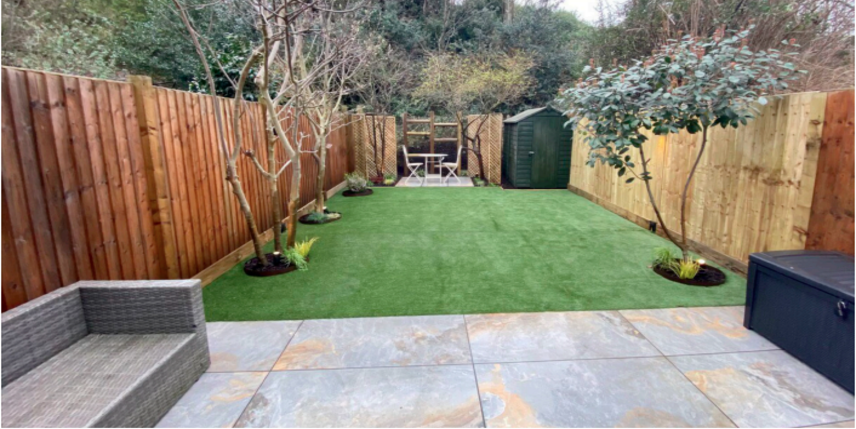
What to Put in a Narrow Flower bed?
Narrow flower beds require careful plant selection to avoid overcrowding while maintaining year-round interest. The key is choosing plants that provide structure, colour, and texture without overwhelming the limited space.
Start with a backbone of evergreen shrubs like box, yew, or native holly. These provide structure throughout the year and can be pruned to maintain the exact size you need. Add deciduous shrubs like spirea or weigela for seasonal flowers, keeping them toward the back of the bed.
For the middle layer, choose perennials that clump rather than spread. Salvias, hardy geraniums, and catmint provide long flowering seasons without taking over. Native options like wild marjoram and meadow cranesbill attract beneficial insects while requiring minimal maintenance.
Ground cover plants like ajuga, lamium, or native wild strawberry fill gaps at the front of the bed without competing with taller plants. These low-growing options suppress weeds naturally while adding texture and seasonal interest.
Consider the flowering sequence throughout the year. Spring bulbs like crocuses and daffodils can be planted beneath deciduous shrubs, providing early colour when the garden needs it most. Summer perennials take over as the bulbs fade, while autumn-flowering plants like asters extend the season.
How the Southwest London Gardener Can Help
Creating a successful narrow garden requires understanding both garden design principles and local growing conditions. Our team brings over 50 years of combined experience working specifically with Southwest London’s unique challenges – from heavy clay soils to varying light conditions and space constraints.
We specialise in natural gardening approaches that work with your garden’s existing conditions rather than fighting them. This means selecting plants that thrive in your specific environment, using sustainable materials that age gracefully, and creating designs that require minimal maintenance once established.
Our process starts with understanding how you actually want to use your space. Do you need somewhere to sit with morning coffee? A productive area for growing vegetables? A low-maintenance retreat that looks after itself? We work with you to create plant lists and design solutions that match your lifestyle and garden’s natural characteristics.
From soil improvement and plant selection to ongoing maintenance advice, we provide comprehensive support throughout your garden’s development. Our local knowledge means we understand which plants work well in specific Southwest London microclimates and can source materials that complement your property’s character.
Conclusion
Narrow London gardens present unique opportunities rather than insurmountable challenges. By thinking vertically, creating layered plantings, choosing multi-functional plants, and working with existing features, you can transform even the most constrained space into a beautiful, functional outdoor room.
The key is understanding that narrow gardens require a different approach – one that emphasises careful plant selection, natural materials, and sustainable practices. When done thoughtfully, these spaces can provide all the benefits of larger gardens while requiring less maintenance and resources.
Whether you’re starting from scratch or looking to improve an existing narrow garden, remember that every successful outdoor space begins with understanding its natural characteristics and working with them rather than against them. Your narrow garden has the potential to become a treasured extension of your home – it just needs the right approach to unlock it.
If you want to know how our team can help, then get in touch today.
Leave a Reply