


Standing beneath a tree on a warm afternoon, you’ll immediately feel the difference. It’s cooler, calmer, somehow more peaceful. That’s your garden’s canopy at work, and honestly? It’s one of the most underused opportunities in London gardens.
Here at The Southwest London Gardener, we get genuinely excited talking about canopies because they transform spaces in ways that ground-level planting often can’t match. Yet so many people focus entirely on what’s at eye level, missing out on this whole dimension above. Let me share what we’ve learned about creating natural canopies that actually work in London gardens.
What Exactly is a Garden Canopy?
Simply put, it’s the upper layer of your garden – trees, climbing plants, anything creating cover overhead. Think of it as your garden’s ceiling.
In nature, canopies do important work: they create shade, shelter wildlife, and regulate temperature. Your garden canopy can do all of this too. The natural approach means using plants that suit our local climate and support local wildlife, rather than fighting against what wants to grow here. Once established, they largely look after themselves.
Why Bother with a Canopy?
It Makes Your Garden More Comfortable
London summers are getting hotter. A good canopy can drop the temperature underneath by several degrees, making your garden actually usable on scorching days. Plus, it helps cool your house too, which your energy bills will appreciate.
It Brings Your Garden to Life
Native trees and climbers support local birds, insects, and wildlife in ways that exotic plants don’t. When we plant a native oak or hawthorn, we’re not just adding greenery – we’re creating habitat. The difference is remarkable. You’ll notice more birdsong, more butterflies, more life.
It Gives You Privacy
London gardens and privacy don’t always go hand in hand. A natural canopy screens you from neighbours and overlooking windows without the harshness of tall fencing. Better yet, it improves with age rather than rotting away.
It’s Good for You
Time spent under trees genuinely reduces stress and anxiety. There’s something about being surrounded by nature above and around you, not just at ground level. I see this with clients constantly, where their gardens become their retreat.
Ideas That Actually Work in London
Trees for Smaller Gardens
“My garden’s too small for trees” – I hear this all the time, and it’s rarely true. The right tree in the right spot transforms even compact spaces.
Field Maple – Beautiful autumn colour, stays manageable, completely unfussy about conditions. Perfect for London gardens.
Hawthorn – Spring blossom that stops people in their tracks, berries for birds in autumn, and supports dozens of insect species. A wildlife magnet.
Birch – That distinctive white bark looks stunning year-round, and the dappled shade underneath is perfect for other plants.
These aren’t fussy exotic specimens needing constant attention. They’re native, they know what they’re doing here, and they get on with it. We source them from local nurseries, so they settle in quickly without the shock that imported plants often suffer.
Climbing Plants for Vertical Space
If ground space is tight, grow upwards. Climbers create overhead interest without taking up precious planting area.
Honeysuckle – That evening fragrance is incredible, and night-flying moths love it. It’s one of those plants that earns its keep.
Ivy – Yes, ivy gets bad press, but hear me out. It flowers late in the season when little else does, providing crucial food for insects. In winter, it offers shelter for birds and hibernating creatures. Managed properly, it’s a real asset to any garden.
Train these over pergolas, arches, or along boundaries to create living ceilings. The trick is choosing vigorous but manageable varieties. We’ve learned through years of experience which ones deliver without taking over.
Fruit Trees – Beauty and Breakfast
Why not make your canopy productive? Apple and pear trees give you spring blossom, summer shade, and autumn fruit. Trained flat against walls or fences (called espalier), they take up minimal space while looking architectural and beautiful.
We love heritage varieties that naturally resist common pests – these have survived for generations because they’re tough and reliable, unlike many modern varieties bred for supermarket shelves rather than garden performance.
Using What You Already Have
That old pergola or arch in your garden – before assuming it needs replacing, let’s look at what we can do with it. Often, these structures just need refreshing and replanting. Using natural wood and climbing plants together creates instant impact that only gets better as plants mature.
Our team love transforming existing features. It’s more sustainable, usually cheaper, and there’s something satisfying about giving old structures new life rather than sending them to landfill.
Making It Happen: What You Need to Know
Placing Your Canopy Thoughtfully
Where you put canopy elements makes all the difference. It’s not just about planting a tree and hoping for the best – positioning determines whether your canopy becomes a garden asset or a constant headache.
Consider the Sun’s Path – Watch how sunlight moves through your garden across the day. That sunny spot at breakfast might be shaded by neighbouring buildings by teatime. We position canopy trees to provide shade where you actually sit and relax, not where you never go. South-facing seating areas absolutely benefit from overhead cover during summer, while morning sun on a breakfast terrace is often worth preserving.
Think About Views – What do you see from your kitchen window or favourite armchair? A well-placed tree can frame a view beautifully or screen out something unsightly. Conversely, planting without thinking can block light from your home or obliterate views you cherish. We always stand in the key spots – inside and out – before deciding where canopy elements should go.
Respect Boundaries – Overhanging trees and neighbours don’t always mix well. We consider mature size and position trees so they enhance your space without creating disputes. It’s far easier to get this right initially than to deal with an awkwardly placed tree later.
Underground Matters Too – Drains, foundations, and underground services all influence where we can plant. Large trees need space for roots to spread without causing problems. This isn’t guesswork – we know which species have aggressive root systems and which behave themselves.
What Thrives Beneath Your Canopy
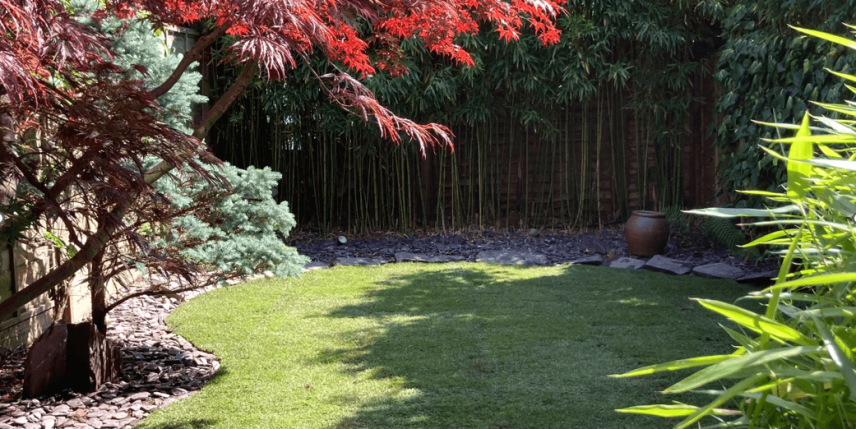
Creating a successful canopy isn’t just about what’s overhead – it’s about what flourishes underneath. This is where many gardens miss a trick, leaving bare soil or struggling grass under trees when you could have a thriving lawn.
Woodland Plants for Dry Shade – Under established trees, the ground is often dry and shady – tough conditions for most plants. But woodland natives have evolved exactly for this. Picking the right species means they knit together to create lush ground cover that looks after itself.
Spring Bulbs for Early Interest – Before your tree canopy fully leafs out in spring, there’s a window of light. Native bluebells, wood anemones, and snowdrops exploit this perfectly, flowering early then dying back as the canopy fills in. You get spectacular spring displays without any summer maintenance.
What Won’t Work – Lawns struggle under canopy trees, no matter what anyone tells you. The combination of shade, root competition, and dry conditions defeats most grass. Fighting this reality wastes time and money. Instead, embrace shade-loving ground covers or even leave the area as natural leaf mulch – it looks intentional and feeds the soil.
Managing Existing Plants – Those overgrown shrubs under your trees probably don’t need removing – they need proper pruning. Plants that have survived in your specific conditions have already proven they can cope with your soil, shade levels, and moisture. That’s valuable information. We often find that careful management of established plants gives better results than starting from scratch.
Our Experience Working in London Gardens
We’ve been doing this for decades across southwest London, and we’ve learned what works and what doesn’t in our specific conditions. Every garden is different – different soil, different aspect, different challenges – but certain principles hold true.
We focus on native and climate-appropriate plants because they’re simply more reliable. We avoid chemicals because natural pest control actually works better long-term. We reuse and repurpose materials wherever possible because it makes environmental and economic sense.
Last year alone, we recycled over 11 tonnes of garden waste – turning it into compost rather than sending it to landfill. That same philosophy guides our canopy work: work with nature, minimise waste, create systems that maintain themselves.
Ready to Start?
Creating a natural canopy isn’t complicated, but it does need someone who understands your specific site and can match the right plants to your conditions. Whether you’re starting from scratch or want to enhance what you already have, we’d love to help.
The gardens we create across southwest London have shade, privacy, wildlife, and genuine wellbeing benefits – without needing constant intervention. They’re spaces that work with nature rather than fighting it.If you’re thinking about adding a canopy to your garden, or you’re not sure where to start, just get in touch. We’ll visit your garden, talk through what’s possible, and help you create something that works for your space and lifestyle.


